


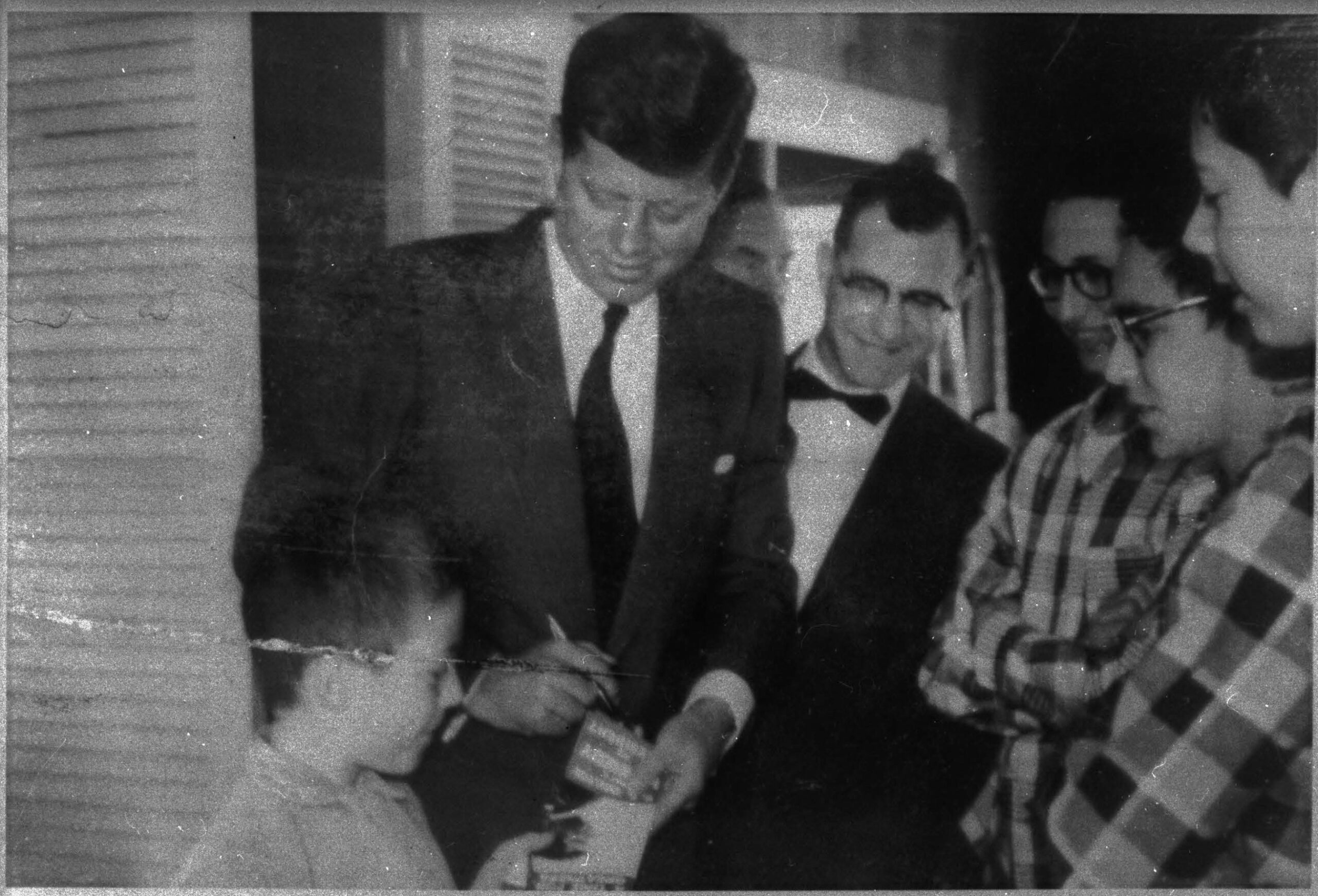
23 Apr President Kennedy in Ashland April 23, 1960
Senator Kennedy in Ashland during 1960 presidential campaign.
The family on Liberty Street that hosted him.
Kennedy slept here in Ashland? No, he did not.
Also, JFK in Medford 1959 and 1960.
Senator John F. Kennedy visited Medford twice and Ashland once in 1959 and 1960. Ashland has always been an isolated small town, far away from large cities of the West Coast, so Presidential visits have been few and far between. President Rutherford B. Hayes was here in 1880 – on a stage coach! President Benjamin Harrison came through on a train after dark in 1891. President Teddy Roosevelt gave a speech at the train station in 1903. William Howard Taft was in Ashland years before he became President. Now, back to then-Senator Kennedy in 1960.
April 23, 1960 – a grueling day for the Senator, a big day for Ashland and Medford
Running for public office, especially President of our huge country, is not for the weak of body or faint of heart. Here’s how local campaign organizer Mary Kelly put it: “We had that day so jammed full that it’s a wonder he could get a breath, the poor man.”
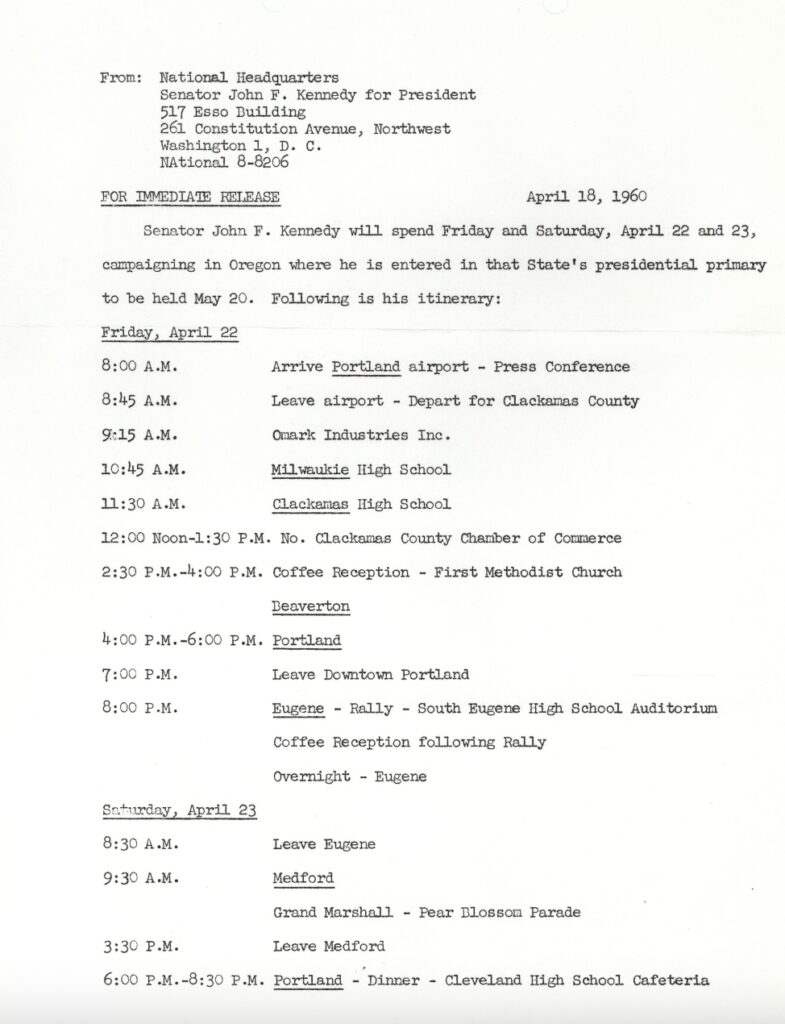
Kennedy’s schedule on April 23, 1960:
Fly from Eugene to Medford
Drive to Ashland
Kreisman house coffee reception, 9:45 a.m. to 10:45 a.m.
Drive to college
Speech at Southern Oregon College gymnasium, 11:00 a.m. to 12 noon
Meeting people in person before and after the speech, most likely
Drive to Medford
Pear Blossom Parade Grand Marshal, 1:00 p.m. to ??
Speech in Medford’s Hawthorne Park after the parade
Meeting people in person before and after the parade
Drive to airport
Fly Medford to Portland
Evening event in Portland area, 6:00 p.m. to 8:30 p.m.
Those are the bare bones, in writing, of one day’s schedule. The “bare bones” don’t capture the complexity of what really happens. For example, you will read a few paragraphs below how a large Medford dinner speech by Kennedy morphed into a separate hotel reception event and then a smaller living room event – and was “still going strong” at 2:00 am! In other words, a one or two hour “event plan” on paper could easily become six or eight hours of nonstop conversations, autograph signing and more.
1960: President Kennedy in Ashland for a morning reception
Let’s begin with the reception at Arthur and Evelyn Kreisman’s house on Liberty Street in Ashland. I found this description of the Ashland events on April 23, 1960 in campaign literature at the JFK Library website.
“Dr. and Mrs. Arthur Kreisman, 455 Liberty, Ashland, Ore. Dr. Kreisman is a professor at Southern Oregon College–probably the most popular one on the faculty. He introduced Kennedy at the assembly in the College Gym on April 23. He and his wife also had a large reception and coffee hour at their home in Ashland that morning before the speech. They sent for a doctor for him (Kennedy) when his throat gave out. Later that same evening, Dr. Kreisman appeared on a television program with Robert Boyer and James A. Redden, recapping the events of the day and giving background material on and arguments for supporting Kennedy. Very effective.”
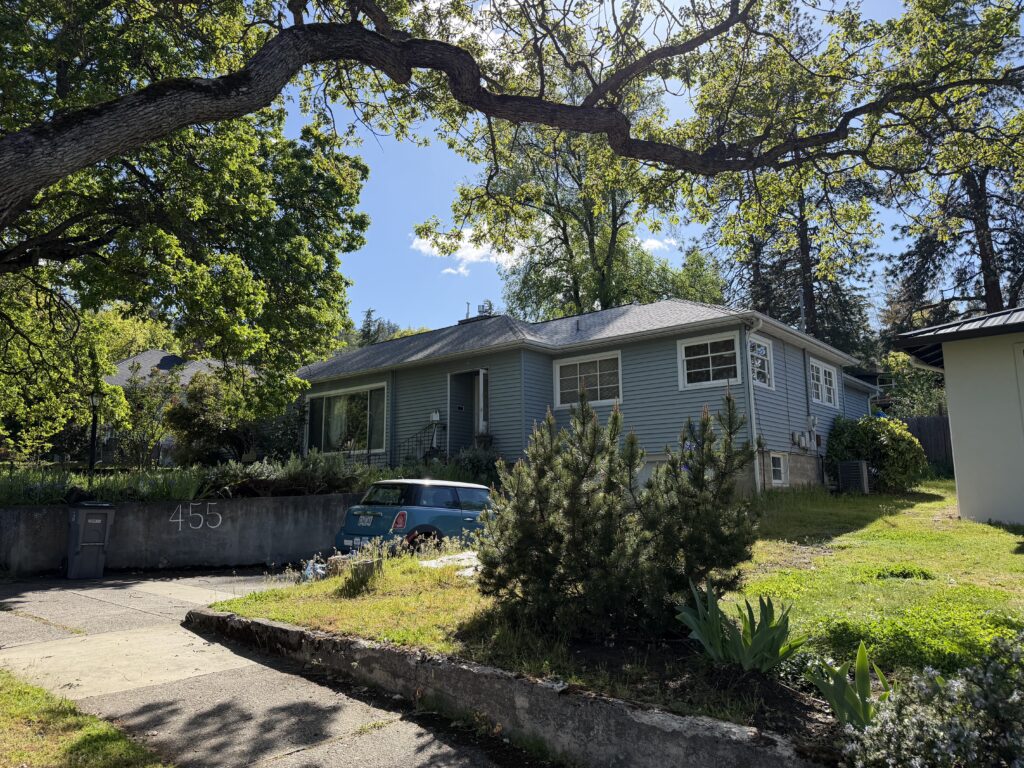
I will focus primarily on this reception, because we have personal stories from people who were there. Arthur Kreisman provided his memories in a 1989 oral interview. Then in 2024, I was able to interview Richard Kreisman, Peter Kreisman and Linda (Neal) Kreisman, and family friend Karen (Fieguth) Smith, who were there as youngsters at the time. I will begin with reminiscences of Dr. Arthur Kreisman, Professor of English at Southern Oregon College in 1960 (now called Southern Oregon University).
Stories told by Arthur Kreisman
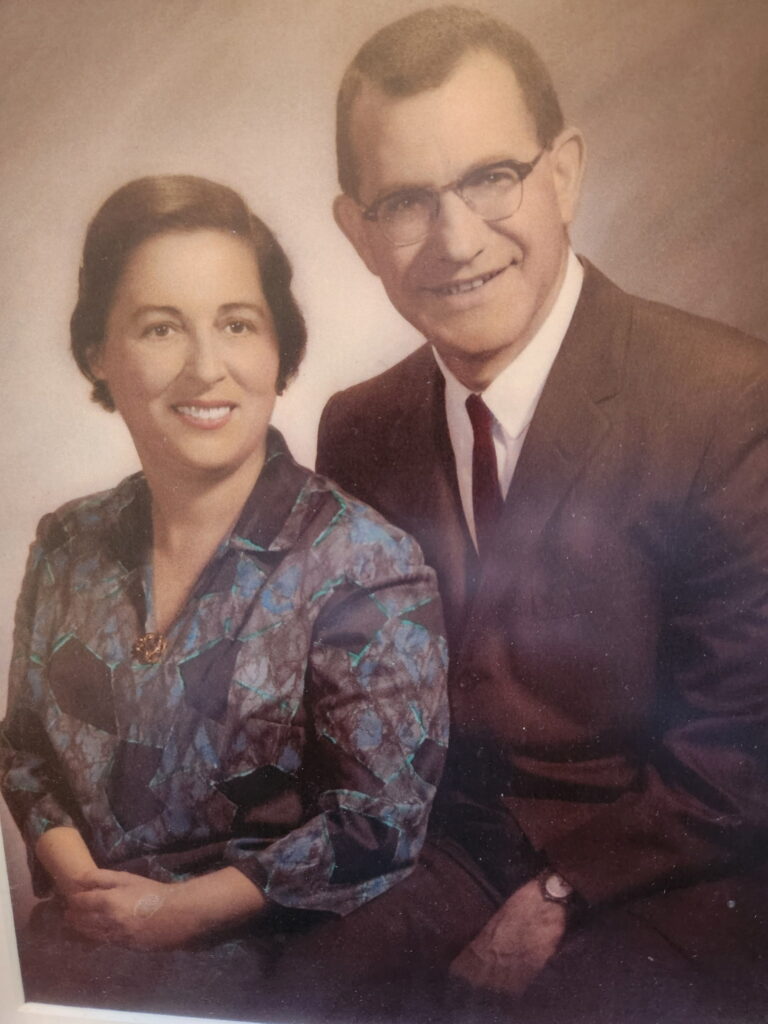
In the Arthur Kreisman interview, he described getting involved in local politics in the early 1950s, not long after moving to Ashland with his wife Evelyn and children. He was very happy to have a decades-long job as a Professor at the college. He became involved in national politics through his desire to help the students. As he put it:
“At the college, I thought it was good to have leading politicians come and talk to the student body, as part of their education. So I was instrumental, to begin with, in bringing people out here. We got Estes Kefauver, a candidate for President in 1952 and 1956. Kefauver came out and spoke at the college. We had Adlai Stevenson come out.”
The 1959 event that went on and on and on …
I think it is fascinating to learn how Arthur Kreisman got to know Senator Kennedy of Massachusetts. In the interview, Arthur stated that he met Kennedy at the 1959 Medford Roosevelt Dinner. This was a large annual event put on by Jackson County Democrats, often with big-name speakers.
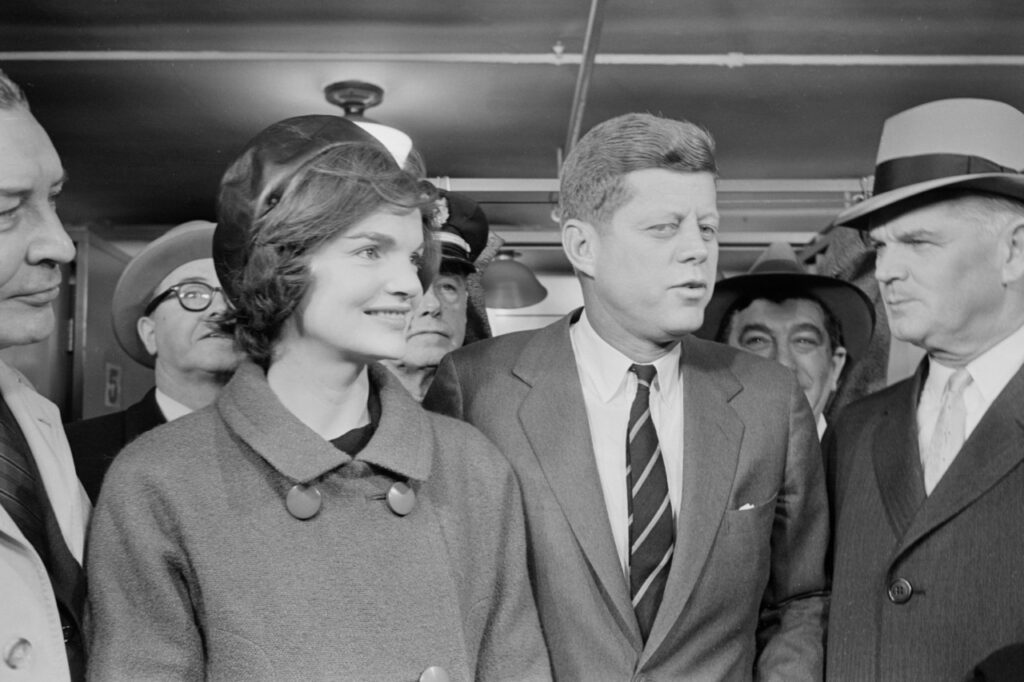
Here’s how Kreisman charmingly described the step-by-step process of transitioning from a huge event to an intimate enough gathering for him to be able to speak in person with the Senator. “Evelyn and I were going to the [Roosevelt] dinner, of course. … There were about 900 people at the dinner. Pretty soon, someone came over and said, ‘We’re having a small reception for the Senator at the hotel [after the dinner]; would you like to go?’ and we said ‘Sure.’ So we went to that, and there were now 100 people. There were drinks and so on. Pretty soon, Bob Duncan came over and said, ‘After this is over, we’re having the Senator over to the house; would you like to come?’ We said, ‘Oh, sure.’ So we went to Bob Duncan’s house … and it was midnight, and here was Senator Kennedy and his wife Jackie and [former Oregon] Governor Holmes and some other bigwigs – and little old me (what the heck am I doing in this kind of company?). [laughter in the oral interview] But it was a pleasant evening, and about 2 o’clock in the morning we decided to go home; they were still going strong. That was the first time we met him.”
Now the Kreisman’s 1960 reception
Kreisman briefly described the coffee reception for Kennedy at his house. “When he was running for President [in 1960], we invited him out to speak at the college. They got the invitation, and they came out here from the West Virginia campaign. He was hoarse. He had a sore throat. He really wasn’t feeling terribly good. We had him as a guest here [at our house]. We had a big coffee for him; the public was invited. We must have had 250 – 300 people. Every room was full. The patio was full of people. A lot of friends and their kids chipped in to help with coffee and stuff like that. She [Jacqueline] was not with him, but his little brother Ted was with him. He was a go-fer, running around doing errands. And his Press Secretary-to-be Pierre Salinger was here, dropping his cigar ashes all over our rugs.
Memories of Kreisman family children who attended the reception
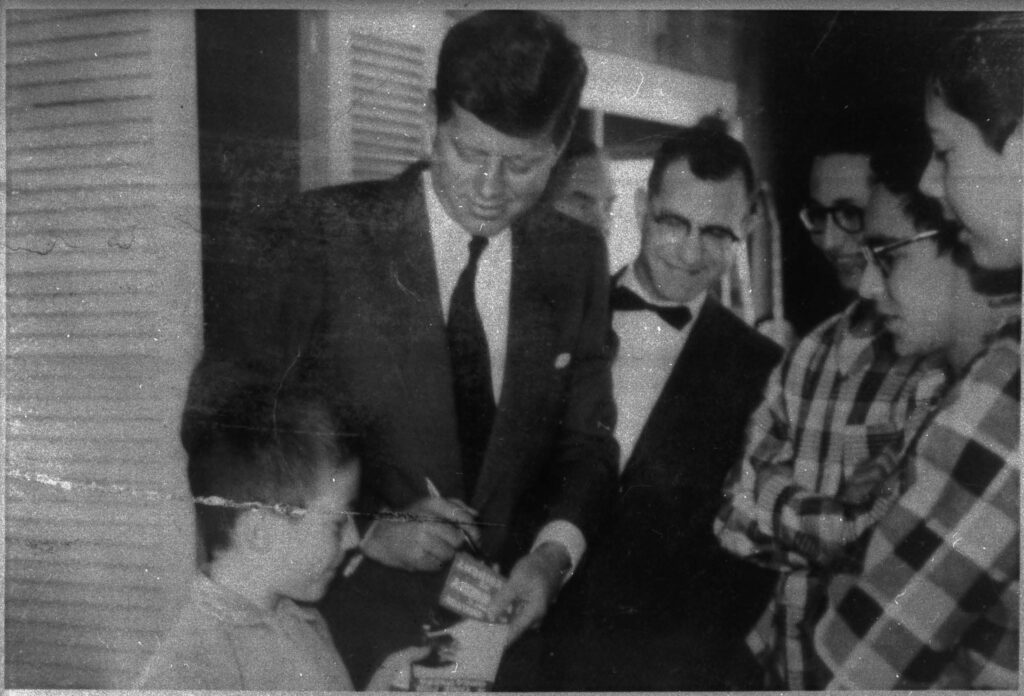
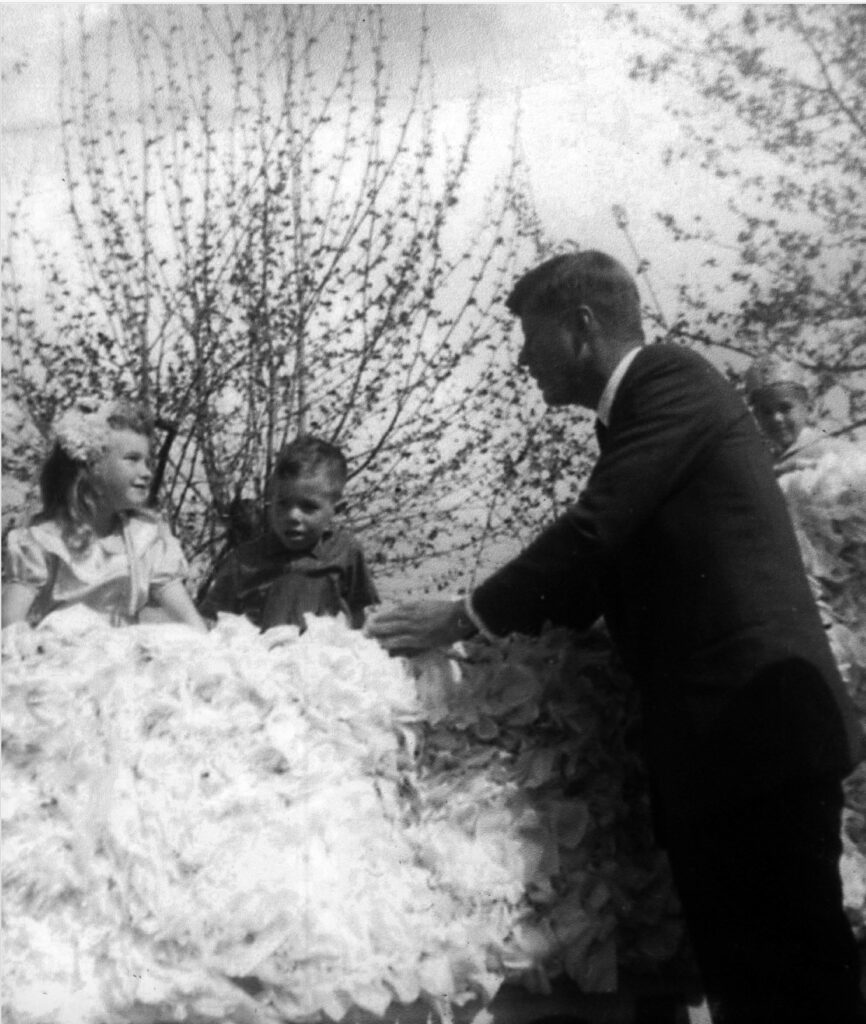
Three of the Kreisman boys are in the photo with Senator Kennedy at the reception. The other brother, Peter Kreisman, and his girlfriend Linda Neal (now Kreisman) told me they had decided to go out on a date, rather than be at the Kennedy reception. They arrived at the end of the event. They were introduced and shook Kennedy’s hand, but didn’t have their photo taken with him.
Here are some of Richard’s memories of the event. “I was 12 years old. I just remember everyone was excited he was going to be coming to our house. When the entourage arrived, it was Kennedy, another person who was always with Kennedy, and Pierre Salinger — who had a cigar in his mouth all the time, flicking ashes on the living room floor. Kennedy had a sore throat and he was having a hard time talking. They went into the master bedroom, where he sat on the bed. They decided to call a doctor and have somebody take a look at his throat. So Pop called our doctor Harvey Woods, who rushed over and treated Kennedy. Dr. Woods came out. My dad walked him to the door, asked ‘What do I owe you?’ and Dr. Woods said ‘Thank you!’ and left.”
Richard also had memories of his mother Evelyn’s reactions to the event. “I remember Pierre Salinger dropping ashes on the rug and Mom was furious that he didn’t have respect for somebody else’s home.” And another: “I remember Mom was a little bit upset because she found out later that they had the bedroom door shut, and she had her girdle hanging on the back of the door. She was sure that Kennedy saw her girdle!”
Memories of Kreisman family friend Karen Fieguth Smith
“When you grow up in a small town and you live at the end of a dirt road, to meet a President of the United States was very, very exciting.”
Karen Fieguth Smith
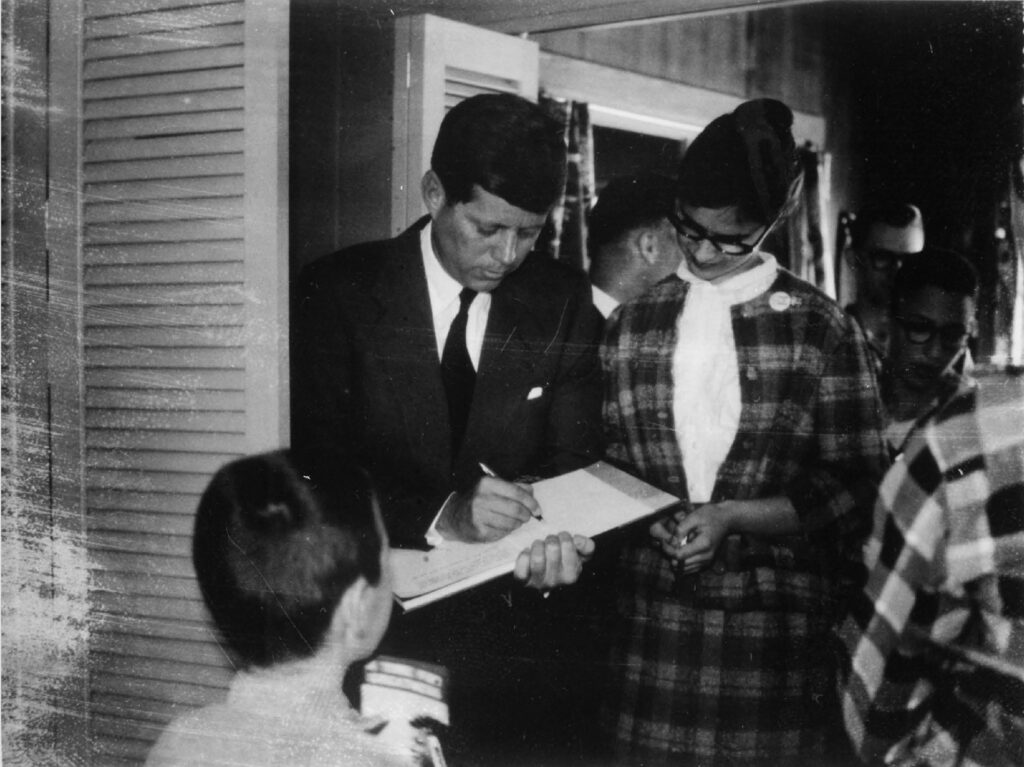
Peter and Linda’s friend Karen Fieguth (now Karen Smith) was also at the reception as a teen, and she got both an autograph and a photo with Kennedy. When I interviewed Karen, she told me: “In those days, you didn’t date so much as you hung around with a gang. We had a group of friends. We would follow politics and talk about it. When Dr. Kreisman brought JFK to town, he was a Senator and he spoke at the college. Peter, Linda and I were seniors in high school and of course we went to hear him speak. It was a big deal.”
Karen added, “Dr. Kreisman and his wife had a reception up at their house on Liberty Street. I have a picture of myself with JFK. I don’t remember a thing about the reception, except that he signed my yearbook. Over the years, that yearbook has disappeared, dammit! That day was quite wonderful, actually, and meaningful. When you grow up in a small town and you live at the end of a dirt road, to meet a President of the United States was very, very exciting.”
1960: Kennedy’s talk at Southern Oregon College
I have not been able to hear personal stories about the college speech. An article in the Medford Mail Tribune of April 24, 1960 described his Ashland speech this way. “John F. Kennedy, Democratic Presidential candidate and Massachusetts senator, spoke before an estimated 1,800 persons in the Southern Oregon college auditorium Saturday morning, covering subjects ranging from the importance of the Oregon primary to the United States’ world position.”
He spoke “clearly and forcefully in spite of bad acoustics and a political campaigner’s hoarseness ….” The article said that he discussed the value of state primaries for choosing Presidential candidates, rather than leaving the decision up to politicians. He also talked a lot about international relations in Africa, India and China, as well as the importance of the U.S. space program and the valuable role of America’s colleges and universities.
After the college speech in Ashland, Kennedy left for Medford and his role as Grand Marshal of the Pear Blossom Parade.
1959 and 1960: Insights into John F. Kennedy’s character
Local Kennedy campaign leader Mary Kelly offered this insight into Kennedy’s character. “We were very impressed with him in one respect, it’s just a little thing, but when you would be talking to Senator Kennedy, you felt like you were the only person in the world. His eyes, his whole attention were on you, and it was the same with Jacqueline Kennedy. Being a hostess at that [1959 Roosevelt Dinner] reception, I would have to almost rudely pull him from one person to the next to get him to focus on the next person. Then his whole attention would be on that person.”
Jack Mullen, who was a teenager at the Pear Blossom Festival parade in 1960, was also deeply moved when he met Kennedy in person. Mullen sent me this email note: “Candidate John Kennedy had me hooked when he came to Medford [in 1960] as the Grand Marshal of the Pear Blossom Festival. I recall his opening line: ‘I may never be President of the United States but at least I can say I was Grand Marshal of the Pear Blossom Festival.’
“At the time, I was a trombone player in the Hedrick Junior High band that marched in the annual Pear Blossom Festival. It was after the parade that Senator Kennedy spoke at the south end of Hawthorne Park, then proceeded to walk through the park to an awaiting car at the north end of the park on Jackson Street. I was able to greet him and shake his hand. He looked me straight in the eye for a long three or four seconds, which I remember and cherish to this day.”
1960: President Kennedy slept here? No, he did not. But he sat here!
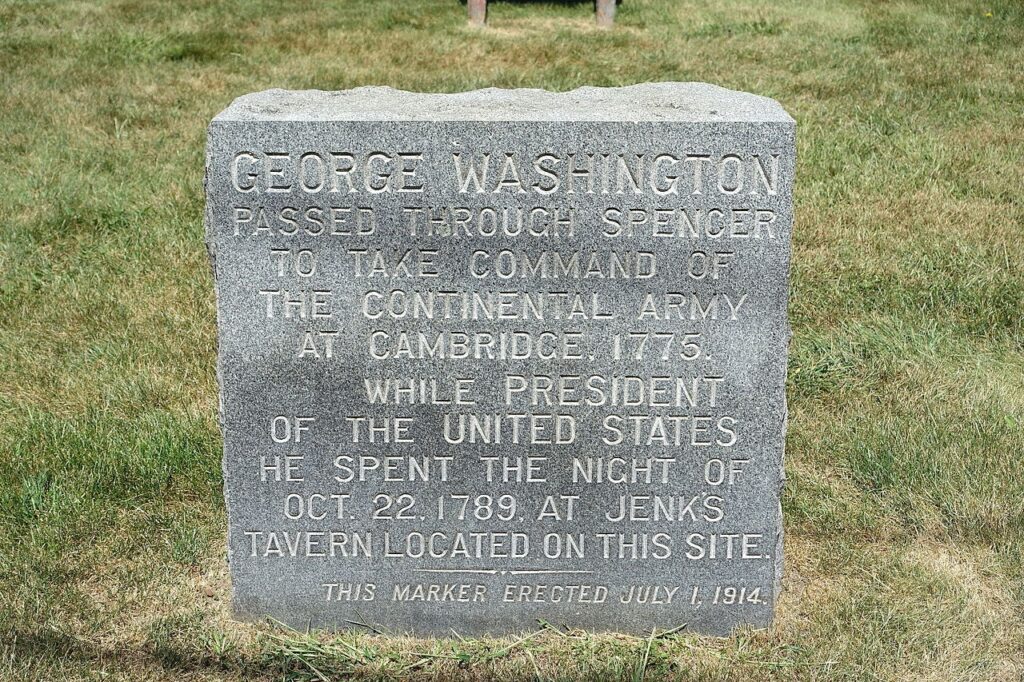
Presidential sleep-over stories go all the way back to “George Washington slept here” sayings at East Coast houses. Ashland even has its share of Presidential sleep-over stories, from President Hayes in 1880 to future President Kennedy in 1960. As far as I can tell, none of ours are true.
The owner of a house on Prospect Street was told that President Kennedy had slept at the house. I also read in an article about Kennedy’s visits to Oregon that JFK stayed at the Kreisman’s house on Liberty Street. That one is closer to the truth, though “visited the house” would be more correct.
Here’s what Arthur Kreisman remembered, with lots of laughter, in an oral interview. “Kennedy wasn’t feeling well, so we called our doctor Harvey Woods to come look at him. Harvey was just delighted – he talked about it for years afterward! And I kept saying to him, ‘Did his throat look any different from anybody else’s?’ Kennedy sat on the bed in our room and when he left, there was a beautiful butt-print on account of him. Gee [we were thinking], should we fill that with plaster of Paris?”
The Kreisman sons who were there remember the family talking afterward about creating a plaque to put on the master bedroom bed. Not “Kennedy slept here,” but maybe “Kennedy sat here.”
1959: He did sleep in Medford
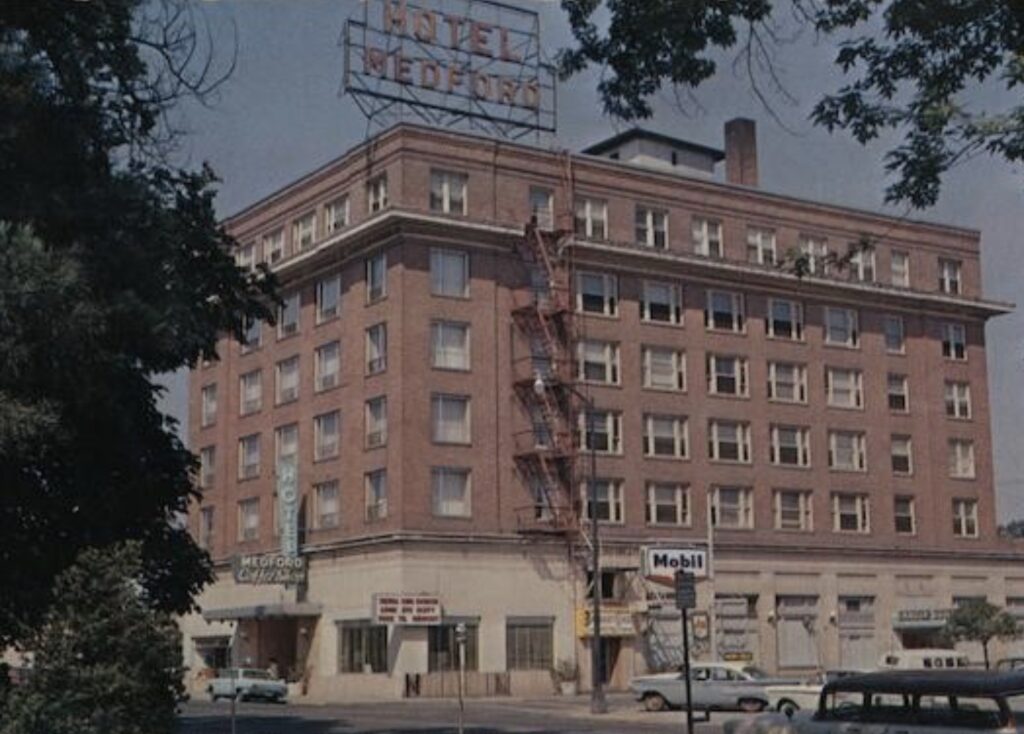
During Kennedy’s March 1959 visit to Medford for the Roosevelt Dinner, he attended events in the evening of March 6 and the morning of March 7. Local Kennedy campaign leader Mary Kelly arranged for him to stay at the Hotel Medford. She said: “I made arrangements at the Hotel Medford. I rode the management so hard at the hotel that they really fixed up a suite as it never had been fixed before, even dragged the carpet out and put in a new carpet and everything for his visit. … So we put the reception on at the hotel too, instead of having it at the school where we usually have the dinner.”
1959: The “Cavemen” of Jacksonville made an appearance
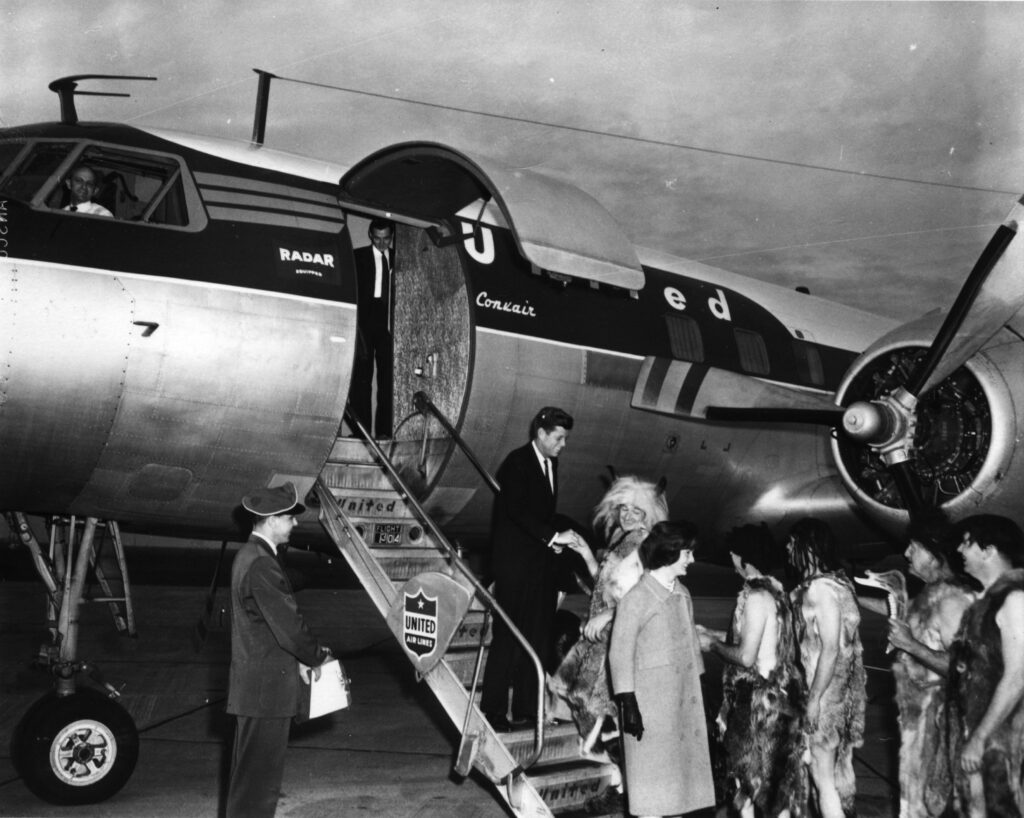
John and Jacqueline Kennedy had quite a surprise as they arrived in Medford on March 6, 1959! Chief Bighorn Fred Richards and several members of the Grants Pass Caveman Club, wearing their full caveman regalia, greeted (or ambushed) the Kennedys as they descended from their small plane. This was a very effective way for them to get national attention for the Oregon Caves and Grants Pass.
According to the Grants Pass Chamber of Commerce website, “Cavemen are a huge part of Grants Pass history. Local businessmen created the Caveman Club in 1922 to boost awareness of Grants Pass and the Oregon Caves. They donned animal furs and ceremonial caveman clubs welcoming visitors to our area. They even welcomed visiting dignitaries John F. Kennedy and Ronald Reagan. They are going strong today and will see them present at major events in Grants Pass! The caveman is also the current mascot of Grants Pass High School.”
1960: Pear Blossom Parade stories
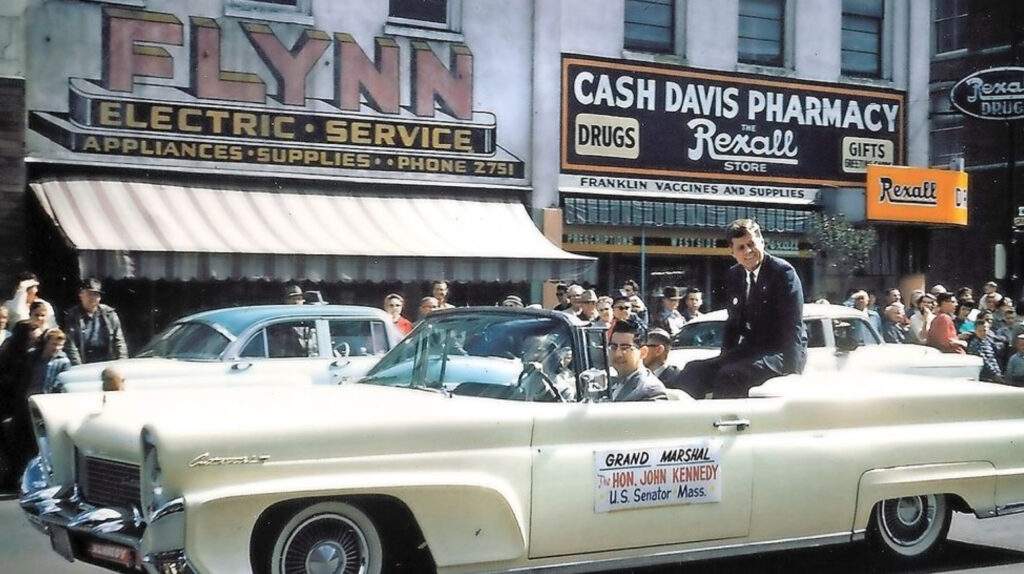
On April 23, 1960, Senator Kennedy went to Medford after his speech at Southern Oregon College. He was the Grand Marshal of the 1960 Pear Blossom Parade, with at least 15,000 people there to watch the parade. Of course, he shook many hands and greeted people of all ages both before and after riding in the parade.
Wally Watkins, a Medford businessman, had the honor of driving the Senator, partly because he owned a new Lincoln Continental convertible. Wally was interviewed for an article in the Medford Mail Tribune of November 22, 2013. His memories give additional insights into Kennedy’s character, in addition to details about the day.
Wally described a tough choice he had faced when asked to drive Kennedy in the April 23 parade. He had already promised his 16-year-old son Michael he would take him fishing on April 23, the opening day of trout season. This was a family tradition for opening day ever since Michael was four. Wally decided to drive Kennedy. His teenage son opted to go fishing, but later in life wished he had been in the car with his father and Senator Kennedy..
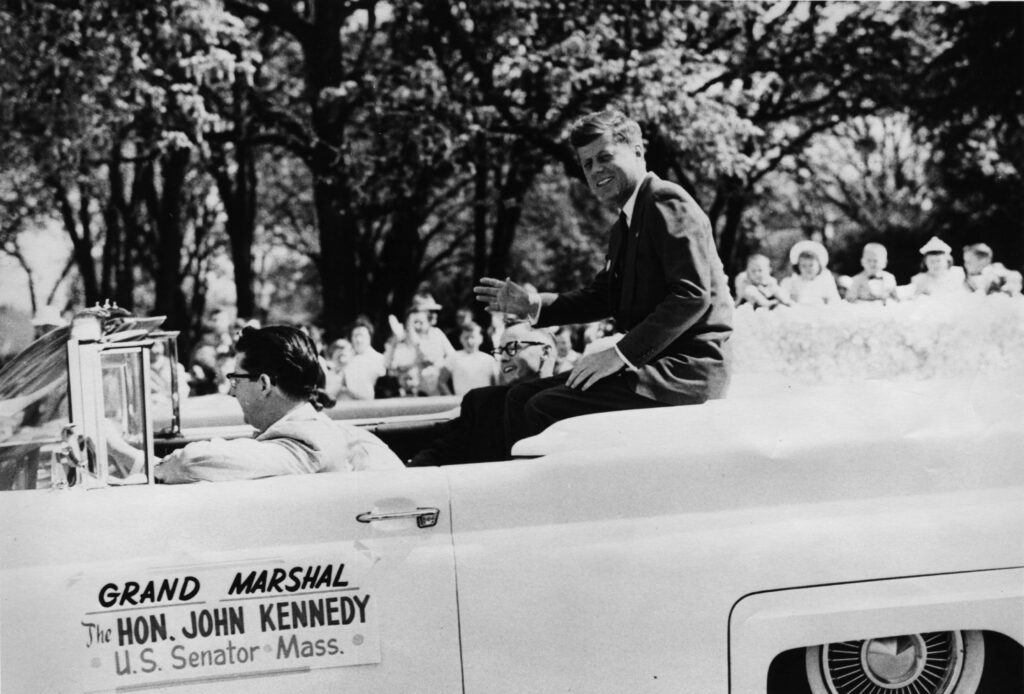
Kennedy, then 42, was just three years older than Wally, and they found a lot to talk about as they drove between events. As Wally recalled: “Senator Kennedy didn’t talk a lot about himself. He wanted to know about the people and the valley. That kind of turned me on.”
At some point, Wally told the candidate that he had missed the opening day of trout season in order to drive him. Kennedy kidded him they could always stop at a fish store to pick one up, which was a sweet memory for Wally.
The article concludes: “After the parade, he drove JFK around Medford, including past the Watkins’ family home in Medford. Later, Kennedy sent Wally a letter noting he felt bad the Oregonian had missed opening fishing day. The letter, which the family still has, also invited him to his inaugural.”
An introduction to John F. Kennedy
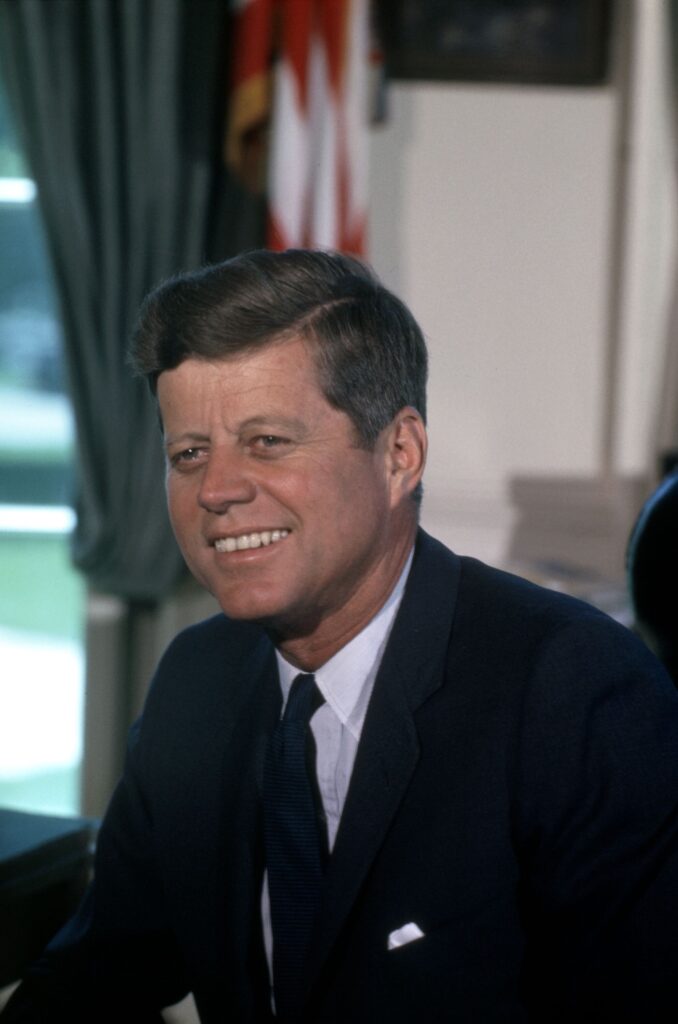
Many people today are unfamiliar with the life of President Kennedy, so here is a brief description to provide some context for his visits to Ashland and Medford in 1959 and 1960.
John F. Kennedy (called “Jack” from an early age) was born into a large Irish-American family in the Boston area. He grew up wealthy and went to Choate boarding school and then Harvard University. World War II changed the direction of his life. He and his older brother Joe both joined the Navy. Jack nearly died when the torpedo boat he commanded (PT-109) was rammed by a Japanese destroyer in 1943. Ten of the twelve crew members survived. “Jack’s brother Joe was not so lucky. He died a year later when his plane blew up during a dangerous mission in Europe.”
“Jack had considered becoming a teacher or a writer, but with Joe’s tragic death suddenly everything changed. After serious discussions with Jack about his future, [his father] Joseph Kennedy convinced him that he should run for Congress in Massachusetts’ eleventh congressional district, where he won in 1946. This was the beginning of Jack’s political career. As the years went on, John F. Kennedy, a Democrat, served three terms (six years) in the House of Representatives, and in 1952 he was elected to the US Senate.”
“In 1956 he was almost picked to run for vice president. Kennedy nonetheless decided that he would run for president in the next election. He began working very long hours and traveling all around the United States on weekends.” This was how he accepted the invitation to come to the Medford Roosevelt Dinner in 1959, where Arthur Kreisman met him. By the time he came to Ashland and Medford in 1960, he was campaigning for President.
His Presidency was known for navigating the Cold War with the Soviet Union, with initiating the Apollo space program and the Peace Corps, and with beginning a national push for Civil Rights legislation. On a more emotional level, his youth (age 43 at the time he became President) and his positive vision for the country inspired millions of Americans. These famous words are from his inaugural speech: “Ask not what your country can do for you, ask what you can do for your country.” Tragically, he was assassinated on November 22, 1963.
[Quotes from “Life of John F. Kennedy” at the JFK Library website]
References:
Anon. Papers at JFKLibrary.org.
https://www.jfklibrary.org/learn/about-jfk/life-of-john-f-kennedy
Anon. “Kennedy Says Oregon Race May be Most Significant,” Ashland Daily Tidings, April 22, 1960
Anon. “Kennedy Refuses Comment on Running Mate Selection,” Ashland Daily Tidings, April 23, 1960.
Anon. “Coffee Reception photos,” Ashland Daily Tidings, April 23, 1960.
Anon. “Kennedy touches on numerous topics during talk at SOC,” Medford Mail Tribune, April 24, 1960.
Fattig, Paul. “Medford man who drove for JFK recalls time together,” Medford Mail Tribune, November 22, 2013.
Mary Kelly, recorded interview by Charles T. Morrissey, February 12, 1966, John F. Kennedy Library Oral History Program.
Biographical Note: Mary Kelly was a campaign worker for the John F. Kennedy for President Organization in Jackson County, Oregon. This interview focuses on the 1960 presidential campaign in Oregon and the anti-Catholic sentiment JFK faced during his campaign, among other topics.
Kreisman, Dr. Arthur. Oral interview by Alan Kinney [spelling??], April 21, 1989.
Kreisman, Peter; Kreisman, Richard; Kreisman, Linda Neal (Peter’s wife). Interview, September 12, 2024.
Mullen, Jack. In “Up Close, with Peter Sage” blog post. Guest Post by Jack Mullen
January 20, 2021, and personal communication.
Shirrel Doty, Photo of Kennedy in Pear Blossom Parade from Thomas Doty website
https://www.dotycoyote.com/family/1960_kennedy.html
Schott, Grant. “Remembering John F. Kennedy; for two years, a frequent visitor to Oregon,” BlueOregon website, Nov. 20, 2013.
Sweetland, Monroe. “The Underestimated Oregon Presidential Primary of 1960,” Oregon Historical Quarterly / Fall 2000 / Vol. 101, no. 3.
Pingback:RECLAIMING MY TIME ON SOUTHERN OREGON COLLEGE SIXTY-FIVE YEARS LATER
Posted at 12:20h, 30 April[…] said he took us to see JFK when he came through on a campaign […]
Cindra
Posted at 17:02h, 24 AprilI love this post! Thank you for sharing this history of JFK! I’m not sure if I ever knew he had come to Ashland. I knew that he had come to Medford for the Pear Blossom Parade. It was cool to hear about him visiting a family on Liberty Street. I have most likely passed by that house during my lifetime. I attended Lincoln Elementary and walked home from school often. I also became a runner in high school and ran all of those roads. Thank you for sharing all these great memories.