


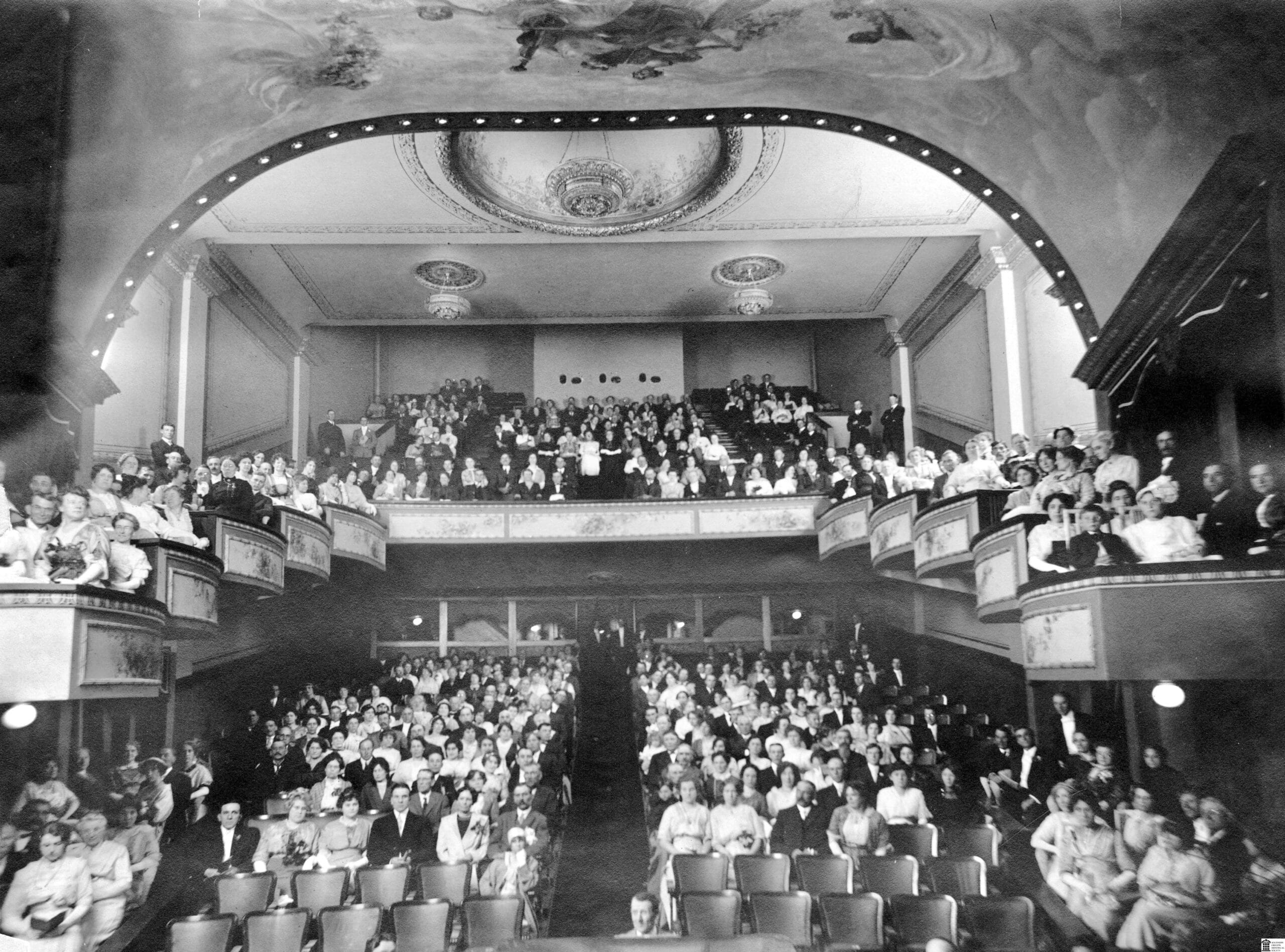
14 May 112 years ago today, the Vining Theatre opened, featuring an Ashland-connected Italian opera star
The big day was May 14, 1914.
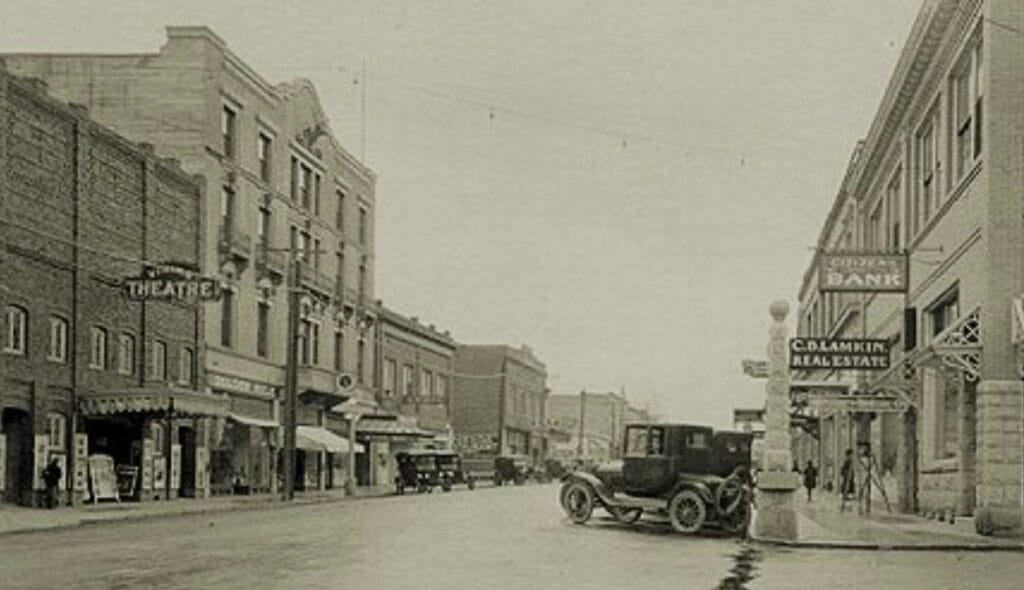
Vining Theatre on Main Street in Ashland.
Multi-generational melodrama!
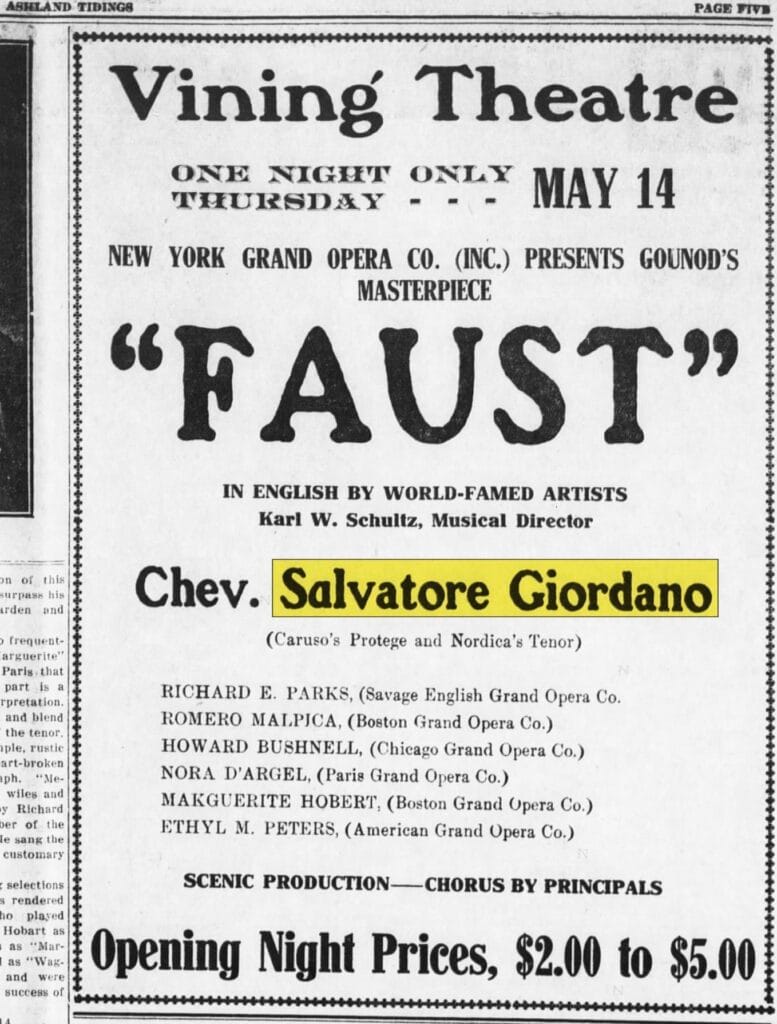
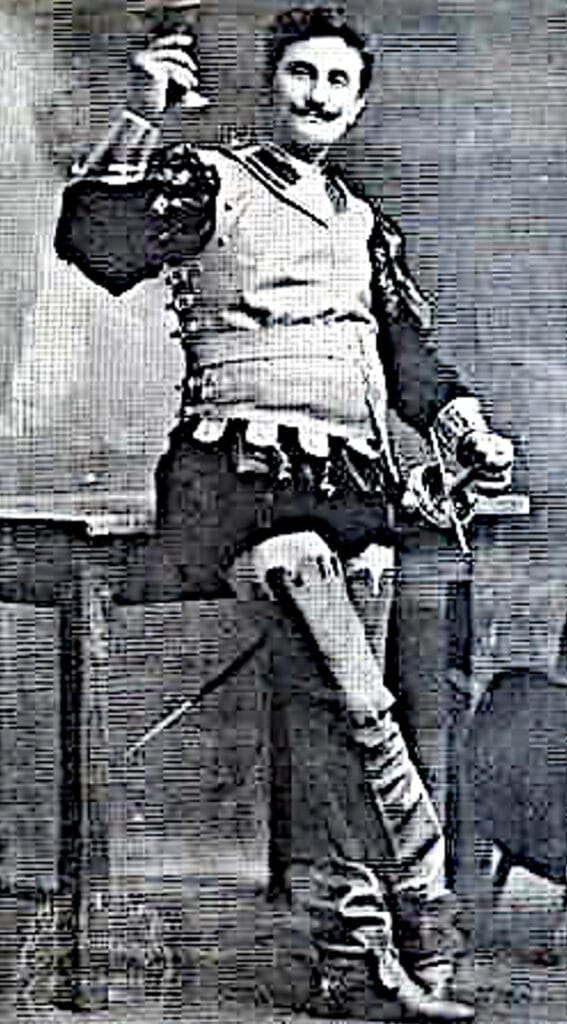
Italian opera star Salvatore Giordano
sang Faust in Ashland that day.
Hear Salvatore sing!
Published May 14, 2026.
“I never met my grandfather, but he was here, in my town.”
Tom Giordano
While sweltering in the hot noon sun at the Lithia Park Bandshell for Ashland’s Historic Preservation committee awards presentation, I was introduced to this multi-generational melodrama. It was May 17, 2023.
Tom Giordano, a retiring committee member, got up to say a few words. After the usual boring remarks, he began telling a family story. His voice broke with emotion as Tom told us his father Mario Giordano never spoke of Tom’s grandfather. So Tom never knew – until recently – that his grandfather Salvatore Giordano was a world renowned opera singer.
Amazing multi-generational local connection
Here’s what made me perk up and get excited. Not only did Tom find out that his grandfather sang with the New York Grand Opera Company. He also learned that the opera company toured the West Coast in 1914. Okay, here comes the Ashland connection.
Tom’s grandfather Salvatore – the grandfather he never knew – sang in our town on May 14, 1914! It was a major event: opening night of the new Vining Theatre on East Main Street in Ashland. The Vining, which originally seated up to 700 people, was located at the corner of East Main Street and First Street, where Chase Bank is now. The Ashland Tidings newspaper gushed, “Everything in the way of interior finishings is to be of the first grade – from velvet curtain and carpets to opera chairs upholstered in leather.”
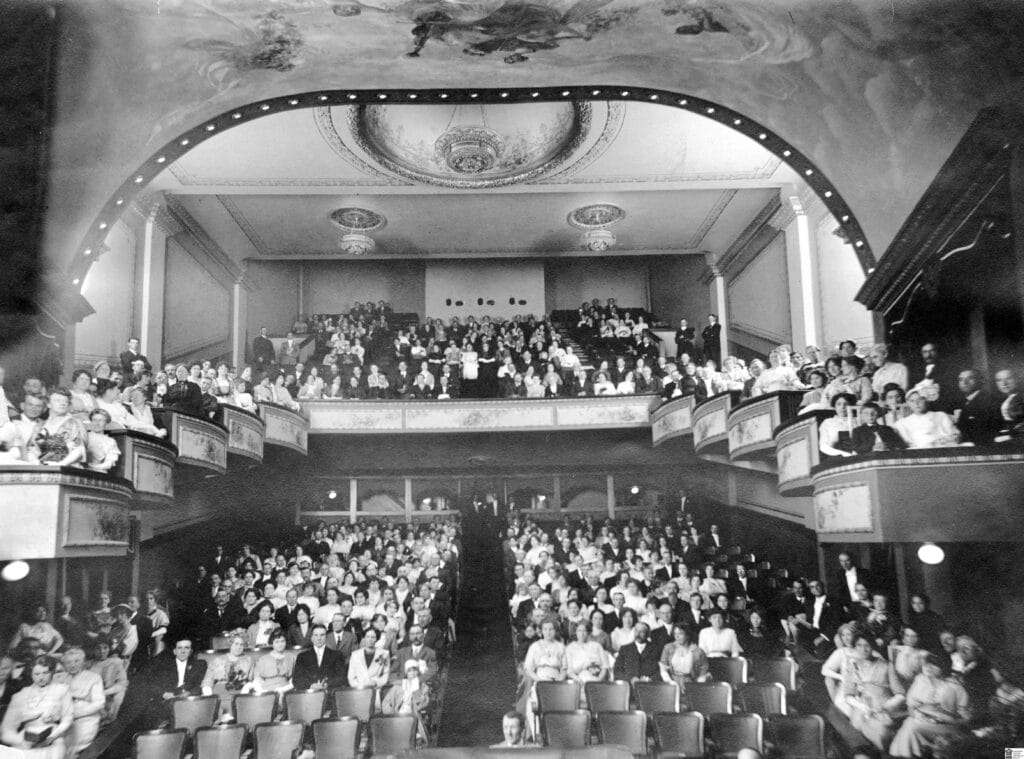
Vining Theatre opening night
Here’s what the Ashland Tidings had to say on May 11, 1914, three days before the opening: “The social feature of the week will be the opening of the new Vining Theatre. The social matrons and buds are looking forward with great pleasure to Thursday night. Ashland’s elect will be out in all the glory to be mustered in for the occasion. The presentation of the famous opera of Faust will delight all music lovers.” Even Minkler’s Cloak and Suit House shop featured the opening of Vining Theatre in one of their ads.
See if you recognize some of the names of historic Ashland “matrons” and “buds” (movers and shakers) who secured box seats for opening night at the Vining: Mr. and Mrs. Domingo Perozzi, Mr. and Mrs. Gwin Butler, Mr. Henry Enders, Sr., Mr. Henry Enders, Jr., Mr. and Mrs. B.R. Greer, Mayor and Mrs. O. Johnson, Professor Irving Vining, Mr. and Mrs. W.Y. Crowson, Dr. and Mrs. Swedenburg, Mr. and Mrs. Emil Peil, Mrs. C.H. Hargadine and guests of Robert Vining.
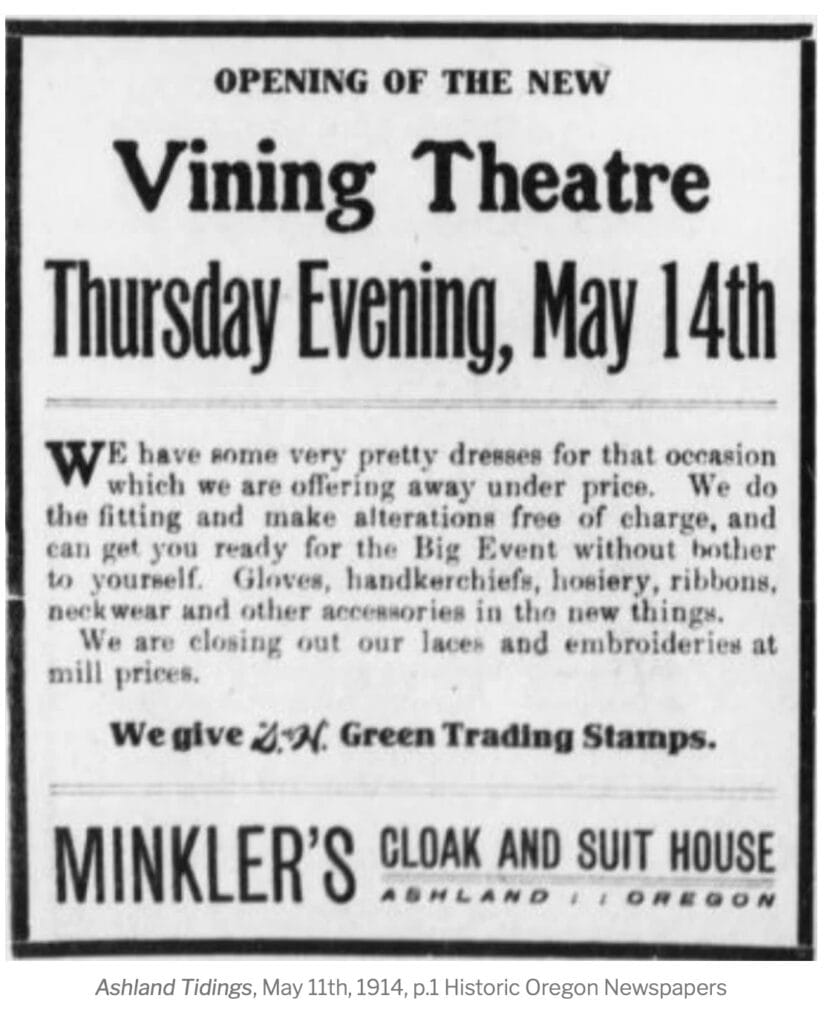
The Vining had chandeliers, box seats, a “retiring room” for the ladies and a “smoking room” for the gentlemen.
Vining Theatre on Main Street through the decades
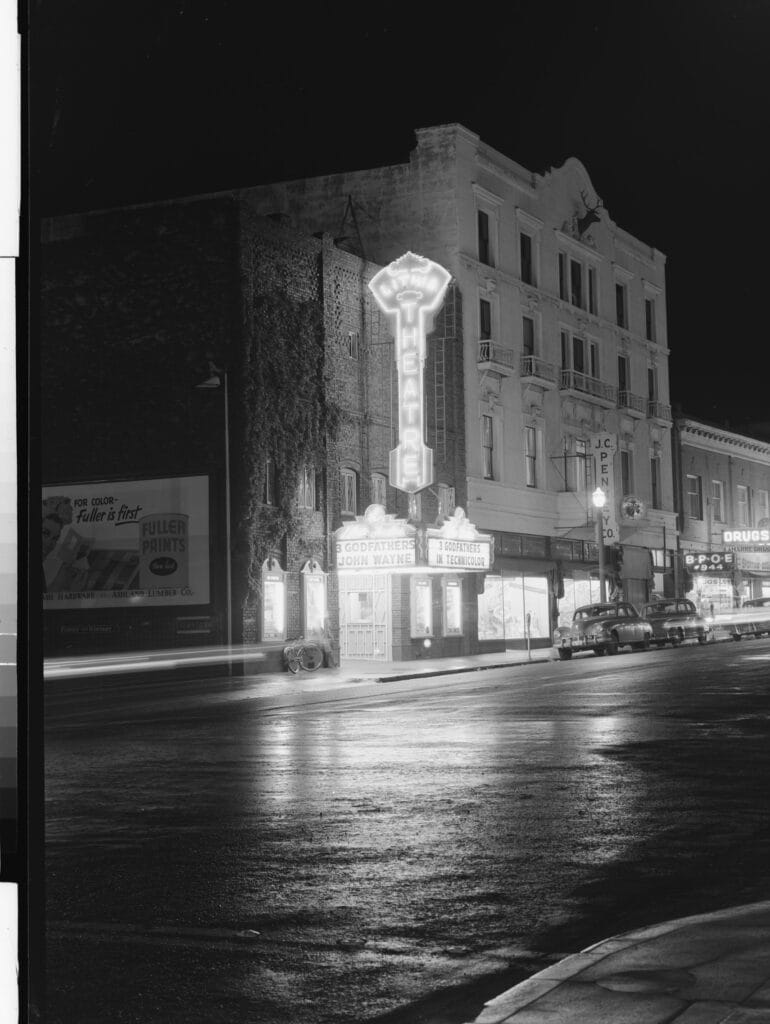
The Vining fulfilled a key role in the community. The Ganiard Opera House on Main Street, which played a similar role from 1889 to 1912, had burned two years before. Now it was the Vining Theater that brought Ashlanders movies, vaudeville shows and national touring shows. It also answered community needs as a place for local amateur performances and fundraising shows. Here’s a brief outline of its changes of ownership and name through the years.
- The theater was built in 1914 by Robert Vining and Irving Vining.
- The next owners were Mr. and Mrs. Bergner.
- H.B. Hurst purchased the theater from the Bergners in 1922. He changed the name from Vining Theatre to Hurst Theater at some point.
- The building was purchased in December 1932 by Walter H. Leverette, who built the Varsity Theater in 1937. He changed the name to the Lithia Theatre.
- After 1946, it was operated by the Robert L. Lippert Theaters chain. They allowed Oregon Shakespeare Festival founder Angus Bowmer to use the Lithia Theatre for plays in 1951 and 1952. I will tell you about Bowmer’s use of this theater in another photo essay with more about the history of the Vining/Lithia Theatre.
- Sadly, the Lithia Theatre burned down in 1952.
- The current bank building was constructed in 1971, according to the National Register. As of 2026, Chase Bank occupies the one-story building.
Introducing Tom’s grandfather, Salvatore Giordano
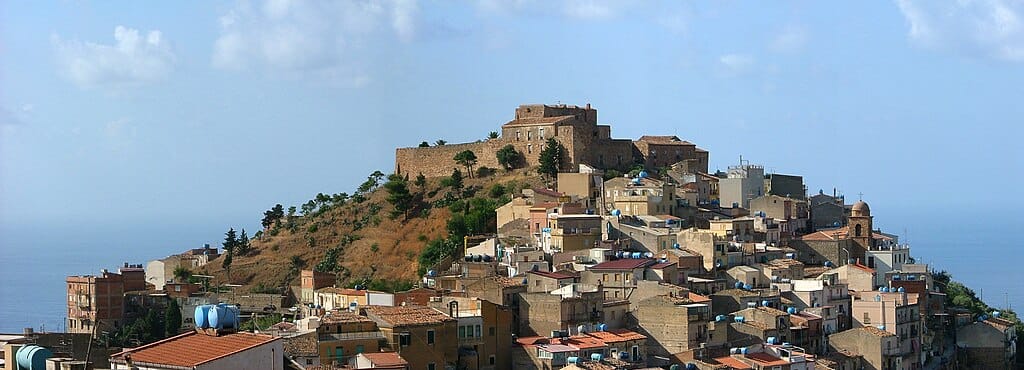
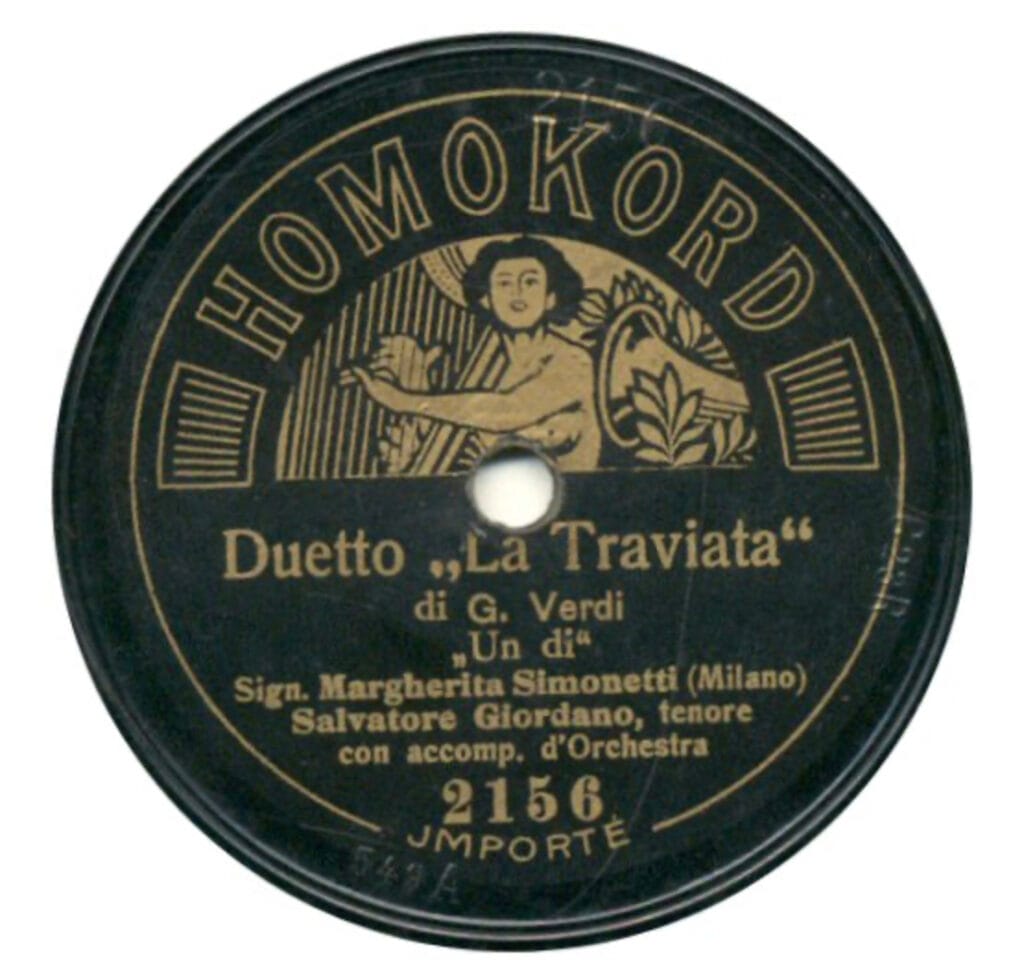
Salvatore Giordano, Tom’s grandfather, was born in Caronia, Sicily in 1879. Little is known of his early life. He made his opera debut in 1906 at the Teatro Andronico in Taranto, southern Italy. During the next five years, his career took off and he performed in many European countries. He was enough of a star in Europe to have recording contracts with both Anker and Homokord record labels. Between 1909 and 1911, these two Berlin companies issued thirty eight records of Salvatore singing opera by Verdi, Rossini, Puccini and many others.
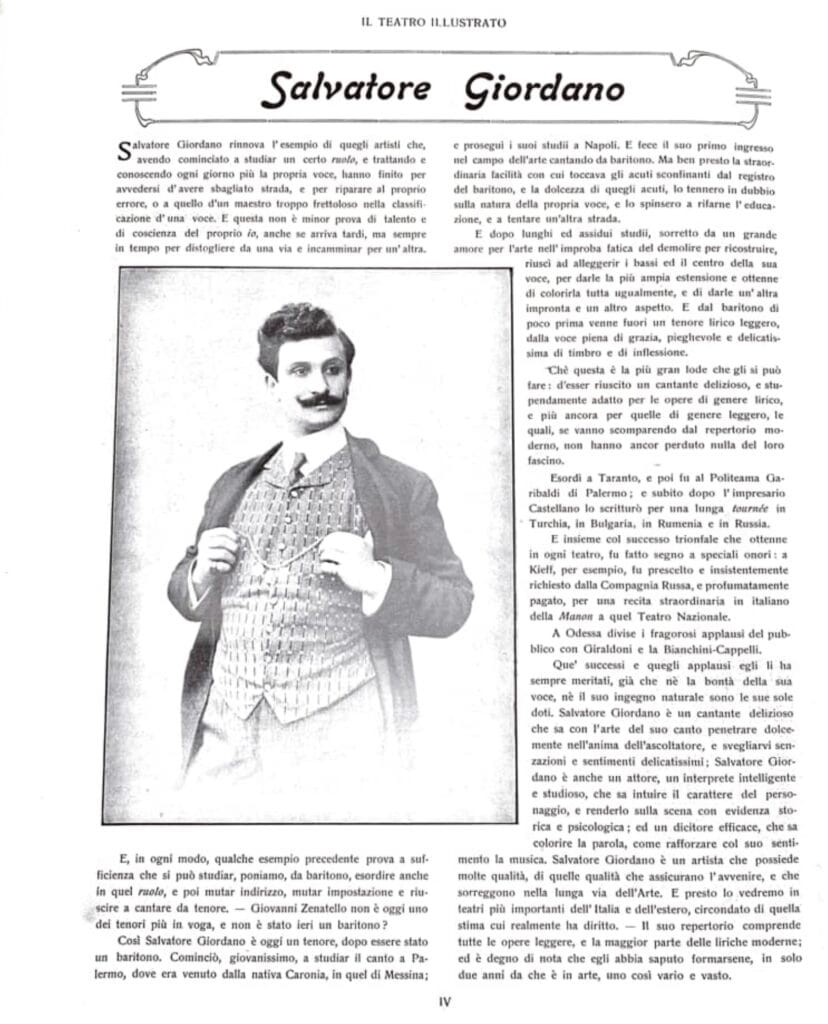
From Italy to the United States
“He was a very handsome man—exceptionally tall and striking in appearance, with a pair of formidable blue eyes.”
Guido Schillaci
Salvatore moved to the United States in 1911. Here is how Salvatore’s grandson Tom described the break in the family: “Salvatore Giordano’s children [Tom’s father Mario and Mario’s four siblings] were from the Naples region. Salvatore moved to the United States and never returned to his family in Italy. Amidst the mass migration of the World Wars, Salvatore’s descendants moved to the United States. Three of them settled into my grandmother’s three story house, one floor for each family, in Boston, Massachusetts.”
Tom remembers when, as a little boy, he used to sit in the enormous pots and pans in the kitchen and watch the adults cook classic Italian dishes while his cousins sang arias. Sadly, no one in the family ever spoke of the famous opera singer, who seems to have never lived with them. He was simply a ghost in their midst, while also the inspiration for their arias.
1914 opera tours
Based in New York, Salvatore sang throughout the United States during the next few years for the New York Grand Opera Company and the Aborn Grand Opera Company. Here is a list of the cities where Salvatore sang during his spring 1914 tour of Faust, which played in Ashland on May 14. Salvatore and the company visited New Bern, Charlotte, Ellensburg, Raleigh, Savannah, Spartanburg, Greenwood, Arkansas City, Rocky Ford, Asheville, Coffeyville, Laramie (first grand opera ever heard in Laramie!), Ogden, Springfield, Lodi (California), San Diego, Ashland, Medford, Salem, Stockton, Tacoma, Aberdeen (Washington), Butte, Spokane, Missoula, Dickinson, Bismarck. That was a lot of small towns hosting performances of an opera company!
Salvatore Giordano sang in Ashland on May 14, 1914
As mentioned above, opening night of the Vining Theatre on East Main Street was a dazzling event for our town of almost 5,000 people. The leading citizens of Ashland were there in their finest clothes. Hosting a New York opera company that presented Faust made it the social event of the season.
Salvatore played the role of Faust in the opera. One of Faust’s arias in the production is called in Italian, “Salve, dimora casta e pura.” Thanks to the internet, you can hear a phonograph recording of Salvatore Giordano himself singing this aria. It is on YouTube, from an Anker recording in Berlin, Germany during January 1909.
Here is the link to hear Salvatore sing.
He must have enjoyed his brief visit to Southern Oregon, for he was back here in the spring of 1915. The Andrews family of Medford included several accomplished singers. They formed an Andrews Opera Company, and for their spring 1915 performances they hired Salvatore as the lead tenor. The group performed to full houses at towns throughout Northern California and Oregon. As best I can tell, Salvatore left the Andrews Opera Company in April to return to New York for a recording session with Victor records.
Salvatore’s last performances seems to have been in New York and Chicago during the year 1917. He was still young, only 38 years of age, yet he disappeared from the world of opera.
What happened to Salvatore?
What happened could easily fit into a movie (or opera) melodrama. Salvatore was apparently a ladies’ man. Italian opera expert Guido Schillaci wrote that Salvatore “loved to embellish the tales of his countless female conquests with ever-changing details.” Schillaci added, “In 1917, the scandal … unfolded: one of Giordano’s lovers was murdered by a hitman hired by her jealous husband. Giordano himself, however, used to claim that the woman was actually the wife of a ‘Black Hand’ boss. [The Black Hand were pre-Mafia Italian racketeers in New York City] He would also recount the details of his own daring escape from New York—how he had secretly stowed away in the hold of a ship while the boss’s hitmen scoured the city, hunting for him with orders to kill.”
He safely fled New York, but we know nothing about his life between 1918 and 1927. Perhaps he was trying to revive his opera career in European theaters, but there is no written record to confirm that. According to Schillaci, Salvatore at last returned to his home town of Caronia, Sicily. He married again, had a son, and lived a simple life on his small farm. According to Schillaci, “Giordano spent the remainder of his life in a state of melancholy yet serene contentment, surrounded by a throng of friends and admirers who would draw him into gargantuan feasts and grand hunting expeditions—yet who could never persuade him to sing for them. Not a single note ever passed his lips again, despite the persistent entreaties and pleas of everyone around him. … He died in Caronia on April 12, 1961.”
Let’s conclude with a sweet, emotional story
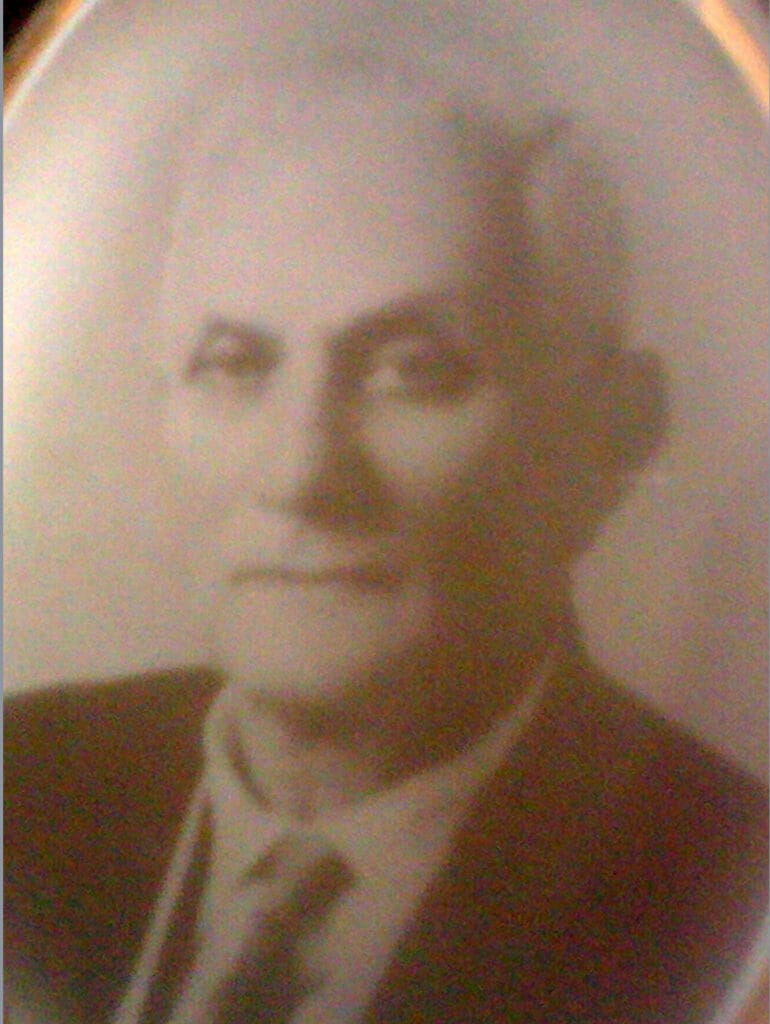
I will conclude with a touching story Salvatore’s grandson Tom Giordano recounted to me. “It was my dad and mom’s 40th anniversary. This was when I lived in Santa Barbara, California. There was a really big Italian restaurant in Santa Barbara. I knew the owners well, so I asked for a special area in the restaurant for my dad’s anniversary. My dad’s sister and our family friends came for the dinner. The owners invited a concertina player to provide music during dinner. The rest of the restaurant was full of other patrons. After dinner, my dad got up and talked to the concertina player, who began playing one of the old Neapolitan serenades. My dad stood up and started to sing, a love song to my mother. I had never heard him sing before! At first his singing was a little ‘crackly’ or out of practice. But once he got going, he started to really sing. All of a sudden, the restaurant full of patrons stopped talking. Right at the end of the song was a big crescendo, and he hit it – unbelievable! There was a moment of quiet when he stopped, then all of the people in the whole restaurant stood up and started clapping.”
In some mysterious way, this song seems to me a tribute by Tom’s father Mario to his own missing father Salvatore, as well as a moment that knit multiple Giordano generations together.
I want to believe that it also helps connect May 14, 1914, when Salvatore sang in Ashland, and May 14, 2026, as I share his story and his grandson’s story with you.
———–
Peter Finkle gives Ashland history and art walking tours. See WalkAshland.com for walking tour information, or to request a private tour for your group or family.
References:
Anon. Ashland Tidings, March 2, 1914.
Anon. Ashland Tidings, April 23, 1914.
Anon. Ashland Tidings, May 7, 1914.
Anon. Ashland Tidings, May 11, 1914.
Anon. Ashland Tidings, May 14, 1914.
Anon. Ashland Tidings, May 18, 1914.
Anon. Il Teatro Illustrato, Sept 1, 1908.
Anon. Rogue News, May 20, 1932.
Giordano, Tom. Interview and personal communications.
O’Harra, Marjorie. Ashland: the first 130 years, Northwest Passages Publishing Inc. 1986.
Recording of aria “Salve, dimora casta e pura” — https://www.youtube.com/watch?v=A-YkT9tWmsU&list=RDA-YkT9tWmsU&start_radio=1
Schillaci, Guido. “Salvatore Giordano,” Facebook page, August 27, 2017.
https://www.facebook.com/groups/grandivocidelpassato/posts/815102891994441
Website: https://www.historicaltenors.net/italian/sgiordano.html
Website: http://forgottenoperasingers.blogspot.com/2013/07/salvatore-giordano-tenor-caroniamessina.html
Website: https://oregontheaterproject.uoregon.edu/theaters/vining
No Comments