


21 Oct William and Rosanah Powell and family
William Powell: “the old cider man.”
Ashland depot: the happening place.
Powell family home and businesses.
The women’s invisible hard work.
17 photo and images.
Table of Contents
William Powell’s obituary in the Ashland Tidings newspaper of September 1, 1913 described him as “perhaps the most widely known man in Ashland.”
Was he a leading politician? A wealthy businessman? A famous speaker? No, no and no.
William Powell: “the old cider man”
He was “the old cider man.” For more than a quarter of a century, he sold fruit, apple cider and apple cider vinegar at the Ashland railroad station. Today, we can scarcely comprehend the proportion of Ashland’s visitors and residents he saw during those years. Those were the years of train travel knitting our country together, ending the isolation of small pioneer towns like Ashland.
A quote from The Southern Pacific in Oregon gives you some idea how busy the Ashland train station was before automobiles became the primary form of transportation up and down the West Coast. “The timetable of June 1912 shows no fewer than twelve first-class and six second-class trains between Roseburg and Ashland.”
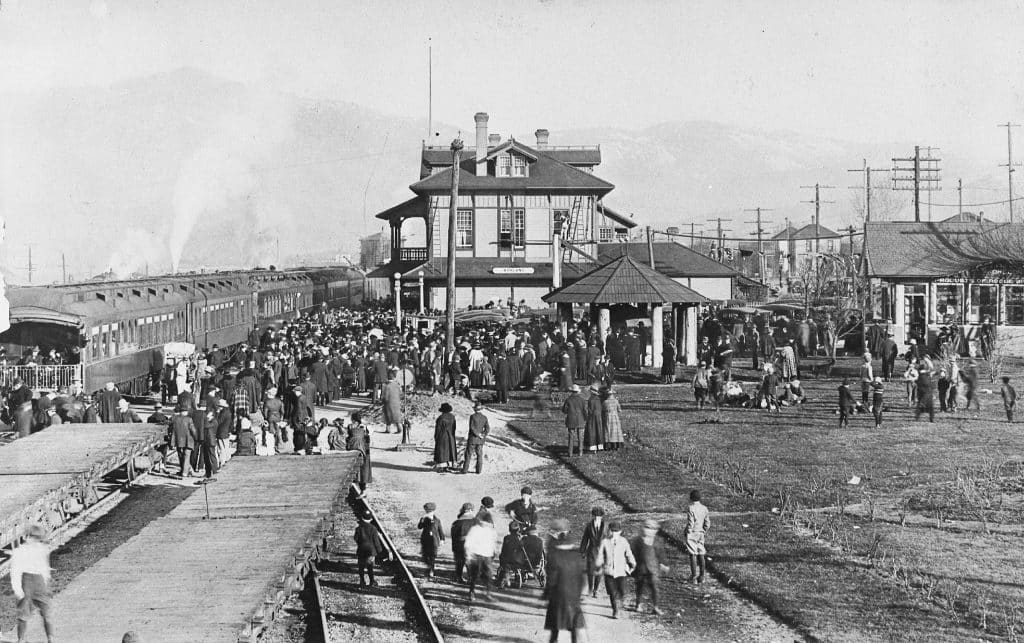
Because of Ashland’s location at the foot of the Siskiyou Mountain range, every train going both south and north stopped in Ashland for at least half an hour. Here’s why. Heading south to California, one engine could pull a train from Portland to Ashland. Once here, due to the steepness of the winding tracks through the Siskiyous, three or four helper engines were added at the Ashland depot to pull the train over the mountains. For trains going north, the extra helper engines were detached from the train during that half hour stop.
This had many benefits for Ashland. First, the town had a large maintenance yard here, with 100 or more railroad employees. Second, the Southern Pacific Depot Hotel on A Street had 42 rooms for people to spend the night, and a huge restaurant that could feed up to 150 people in 30 minutes if needed.
For William Powell specifically, it meant that passengers emerged from a dozen or more trains a day looking for food, drink and a chance to stretch their legs. Nearly every visitor to Ashland came by train, stepping out at the station. Nearly every Ashland family had reason to be at the train station from time to time. Try to imagine how many hundreds of people he saw and spoke with on a typical busy day! Not just the travelers, but also all the local folks who came to meet or see off their friends and family members.
Before he was “the old cider man”
William M. Powell was born in Indiana in 1837. According to one record, he married Rosanah Burns in Indiana on November 10, 1861. Exactly 9 months later their first son was born – August 9, 1862. Another record said they married November 10, 1860. I like the “exactly 9 months” date better!


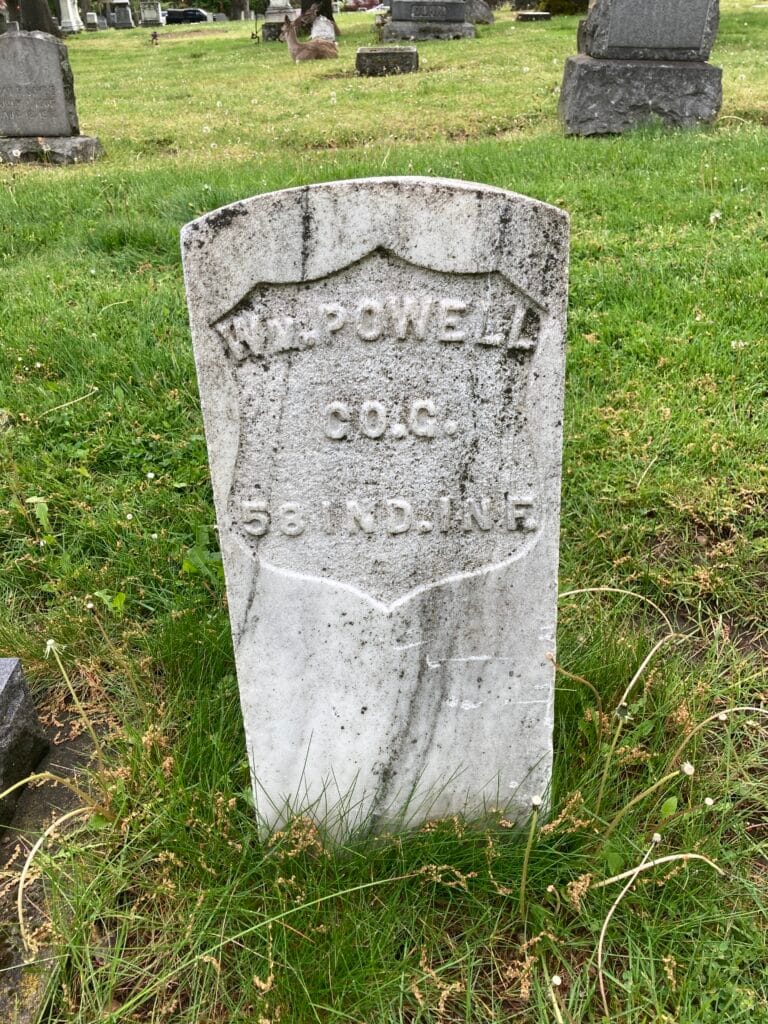
William’s grave marker at Ashland Cemetery shows that he served in the Union Army during the Civil War, in Company C of the 48th Indiana Infantry. That partially explains why their next child wasn’t born until 1870. They had nine children in all, six of whom lived into adulthood.
His Civil War service explains why in Ashland he was listed in the rosters as attending several gala annual balls of the G.A.R. – that was the Grand Army of the Republic, Union veterans of the Civil War. The G.A.R. became one of the first grassroots advocacy groups in the U.S., supporting voting rights for Black veterans and lobbying Congress for veterans’ pensions.
From the Midwest to Oregon
William’s 1913 obituary says: “After the war, he came to Baker City, Ore., crossing the plains in 1874. He relocated to Ashland in 1884, and shortly after took up the business of selling fruit and cider at the depot, which he followed up to two days before his death.”
Second son Thaddeus (Thad) gave a brief but vivid description of the 1884 relocation from Baker City to Ashland. He wrote in his memoir: “We came to Ashland in 1884 with two teams and wagons. Father drove one and I the other. I was then 14 years old.”
They didn’t have freeways, or even paved roads; just dirt wagon trails. Today, the 450 to 500 mile distance is about a ten hour drive. If the Powell family wagons were loaded with all of their possessions as well as all of their children, the trip probably took two to three weeks. That was a lot of responsibility for a 14 year old!
Living at 462 A Street
According to the National Register, William and Rosanah purchased several lots on A Street in 1889 and built their house at 462 A Street, a small house that’s still here. The house was just half a block from the busy train station and Depot Hotel.
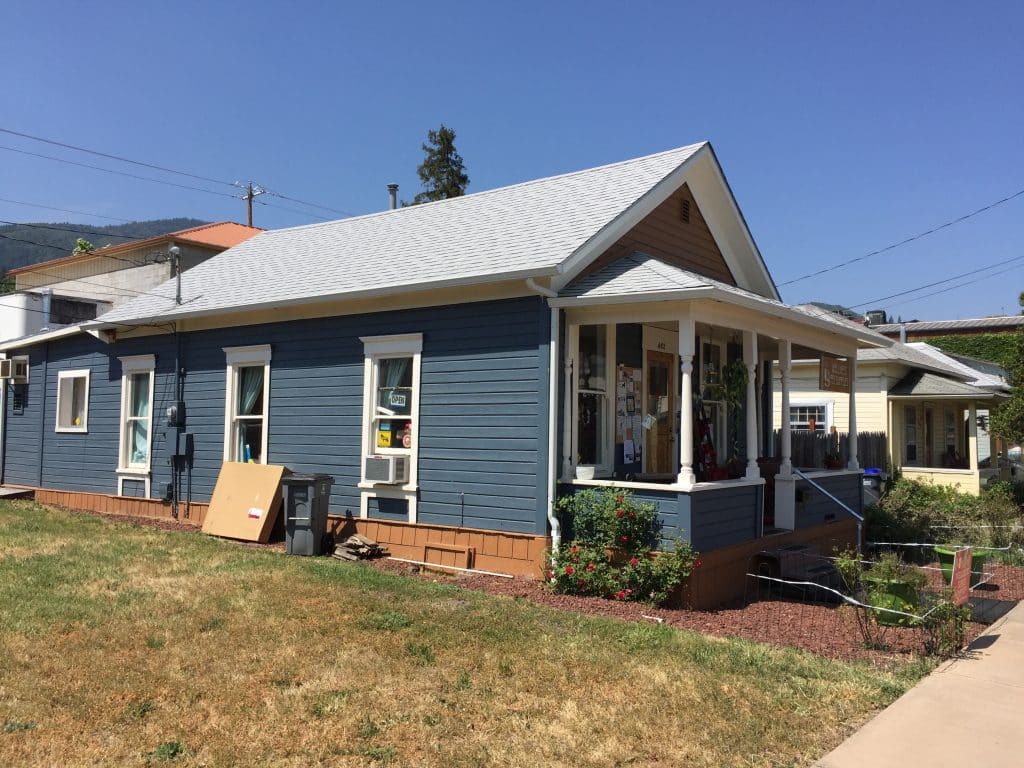
Their son Albert lived in this house for most of his life, inheriting it after his parents died. For many years, his wife and family shared the house with him.
The apple cider cart

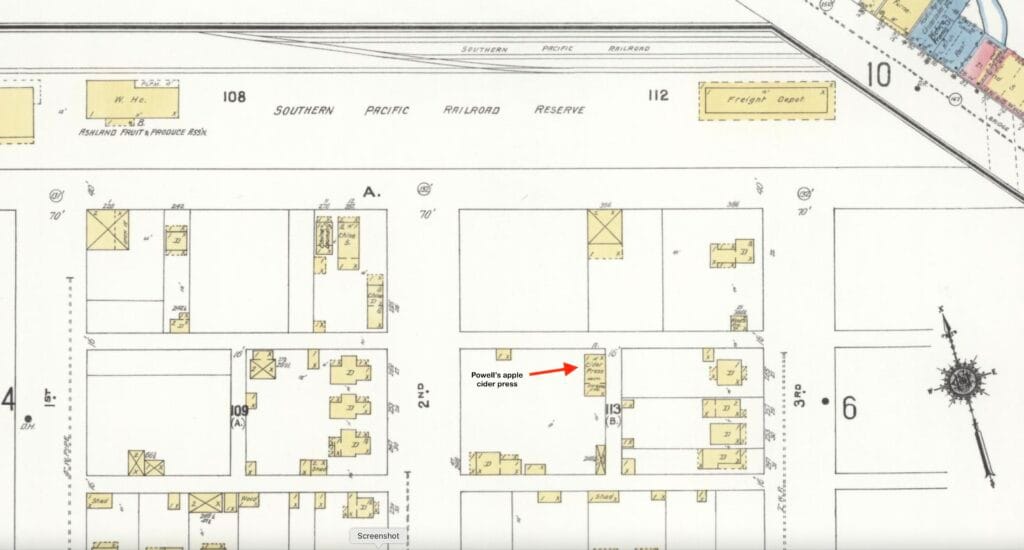
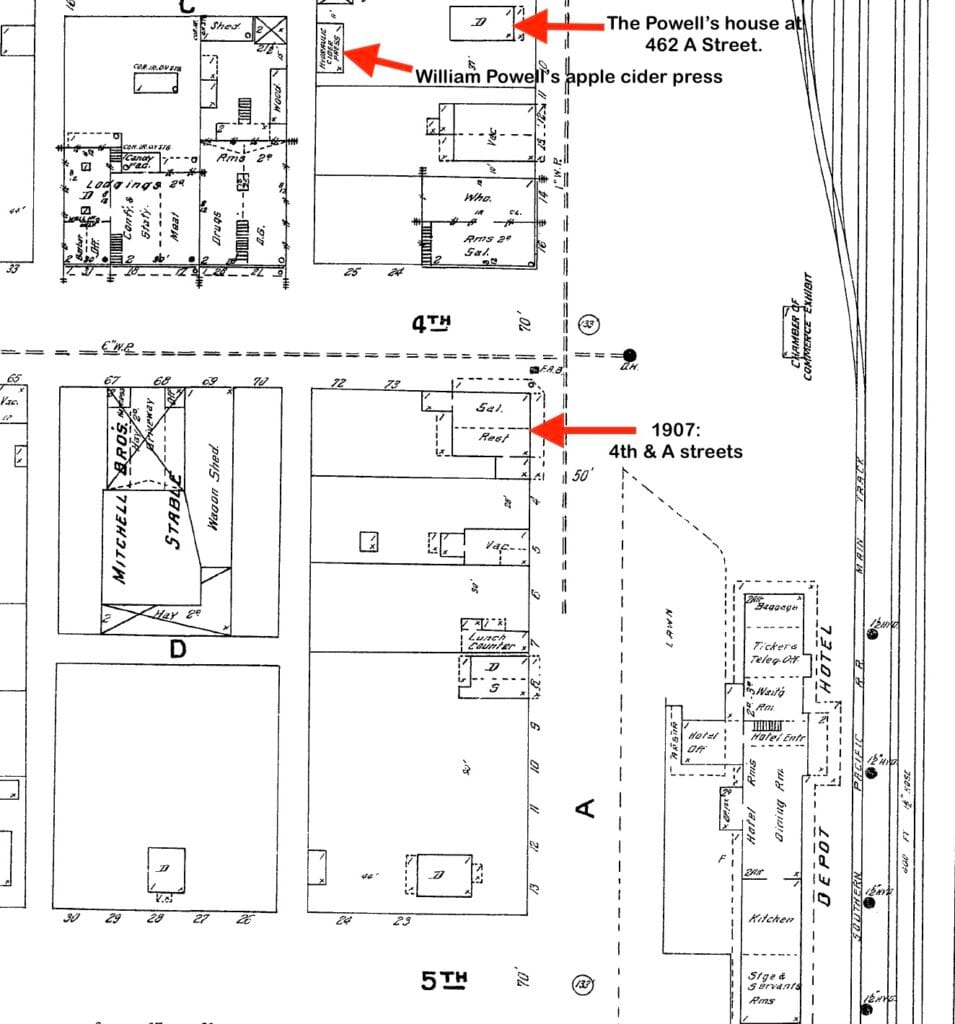
For decades, William “the old cider man” had a cart at the train station, featuring his apples and apple cider. A 1907 Sanborn map shows a small “hydraulic cider press” right behind the Powell’s house. Based upon a 1911 Sanborn map, he also had a larger apple cider press on an alley one block from his house.


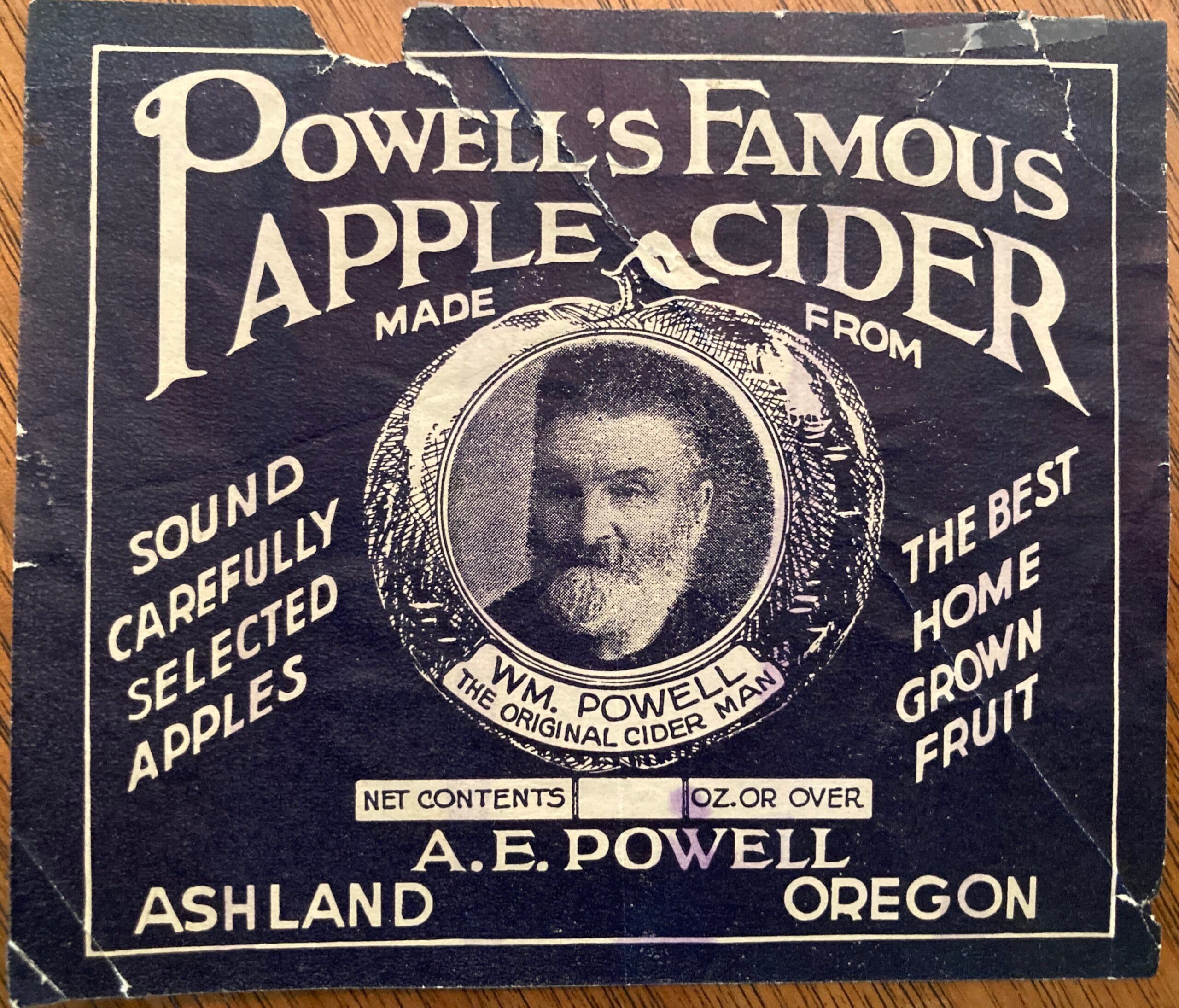
Notice the apple cider labels. All of the labels that have been saved include the name A.E. Powell, who is William’s son Albert Edwin “Allie” Powell. Allie was the youngest child and seems to have helped his father with the apple cider business from a young age. After William died in 1913, Allie and his wife Rosa took over the apple cider and vinegar manufacturing business. They also owned or managed a confectionery shop in Ashland for decades. Their shop may or may not have been the same one brother Thad owned for six years, as described below.
Powell wasn’t the only person selling fruit at the train station. Back in the years when many trains a day would stop in Ashland, the train depot was a magnet for Ashlanders of all age, especially kids. It was not only exciting, but was also a source of income. Old photos like this one show Ashland youngsters peddling small baskets of locally grown fruit to the train passengers for a nickel a basket. As bothersome as kids could be, they added to the energy of the depot and they earned some spending money the good old fashioned way – by working for it.

The apple cider and ice cream store

An early 1900s photo shows William Powell’s store at the corner of Fourth and A streets, which was almost across the street from the depot and just half a block from the family’s house on A Street. The name of the store says it all: “Wm Powell The Old Cider Man.” This must have been a summertime photo, with the large sign featuring ice cream cones and cold apple cider. Based upon looking at old Ashland maps, this seems to be the first building at this corner, possibly built in 1901. Our solid clue is a 1907 Sanborn map, which shows a saloon and restaurant here. Did he also sell hard cider? I doubt it.
The Powell’s store at Fourth and A streets turned out to be multi-generational, as was the apple cider business. Williams’s son Thaddeus took over the shop in 1910. Here’s a photo of Thaddeus at the store.
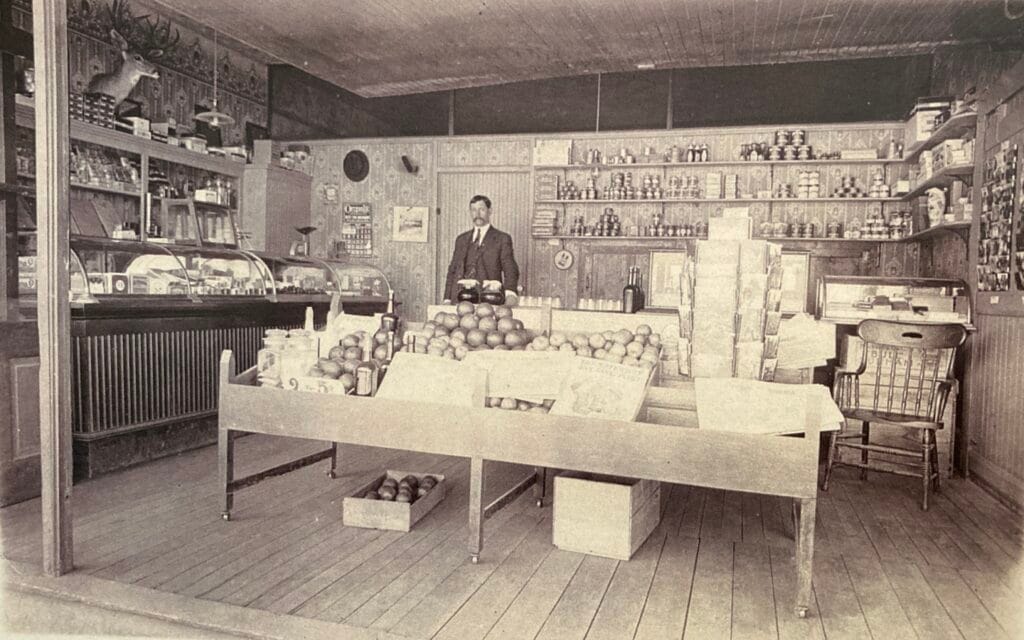
Thaddeus decided to switch careers in 1916. According to the Ashland Tidings of December 25, 1916: “William Jeter has purchased the old reliable fruit store and supply headquarters of Thad Powell, who has conducted the business since 1910, at the corner of 4th and A streets. Powell is resting up for a while and looking after his billiard hall and rooming apartments which are located in his building across the street from the old store.” This was at the opposite corner of 4th and A streets, where the Hill Station shop is currently located.
Here is how Thad described his career shifts in his memoir. “In spring of 1910 I took up the confectionery and grocery store on Cor. 4th & A street, where I ran that until spring of 1916. Then sold it and started transfer business. Started the first fuel oil business in Ashland, with office in our home at 337 Oak St. Built a 15,000 gal. concrete storage tank on Water Street. Also ran gravel business several years. Did a $5,000 job for Lithia Hotel, doing all their excavation work. Sold out business in 1944.” He was 74 years old in 1944!
Running a rooming house in the early 1900s was hard work!
Here are additional insights about the hard work of Thaddeus Powell’s wife and daughters. Before marrying Thad in 1895, Laura worked in local businesses. Daughter Hazel mentioned two of them: “Mother worked for some years in the old Woolen Mill which stood between Ashland Creek and Helman Street where Newbry’s Packing House now stands. She worked for three years at the old Depot Hotel Dining Room [on A Street], which was a first class dining room with the best of everything.”
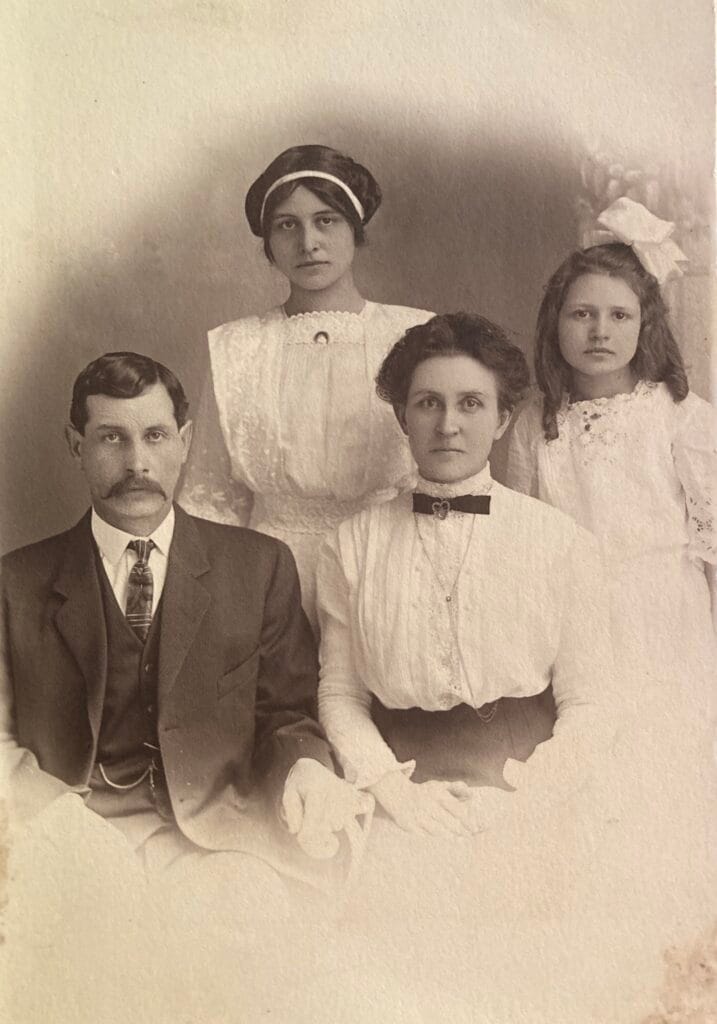
Did she stop working after marriage? Hah! History stories often fail to describe how hard women worked, usually behind the scenes. First, here’s how Hazel described her mother’s life when Hazel was young, before Ethel was born. “She looked after me [Hazel], did all the housework, cooking, washing by hand for the seven of us. Water for washing was carried from the well. White clothes and linens had to be washed, boiled, blued and hung up. Then dampened and ironed with heavy irons heated on hot wood stove. Most all cottons were starched also, excepting sheets, and towels. Remember those long ruffled dresses!”
Later in her story of her mother’s life, Hazel described those rooming apartments in the second floor of the building on the other side of Fourth Street. “While Dad [Thaddeus] had the rooming house at the corner of 4th and A Streets, mother had to wash all the sheets, pillow cases, towels, blankets, including boiling of the linens and ironing them. Had eight bedrooms to keep up and the bathroom to clean. As many as three changes in 24 hours when had lots of trains and railroad men were busy. [My younger sister] Ethel and Mother carried mattresses up steep stairs (no hand-holds on those mattresses) and got to laughing at their predicament so they had to sit on stairs to recuperate.”
Wrap up
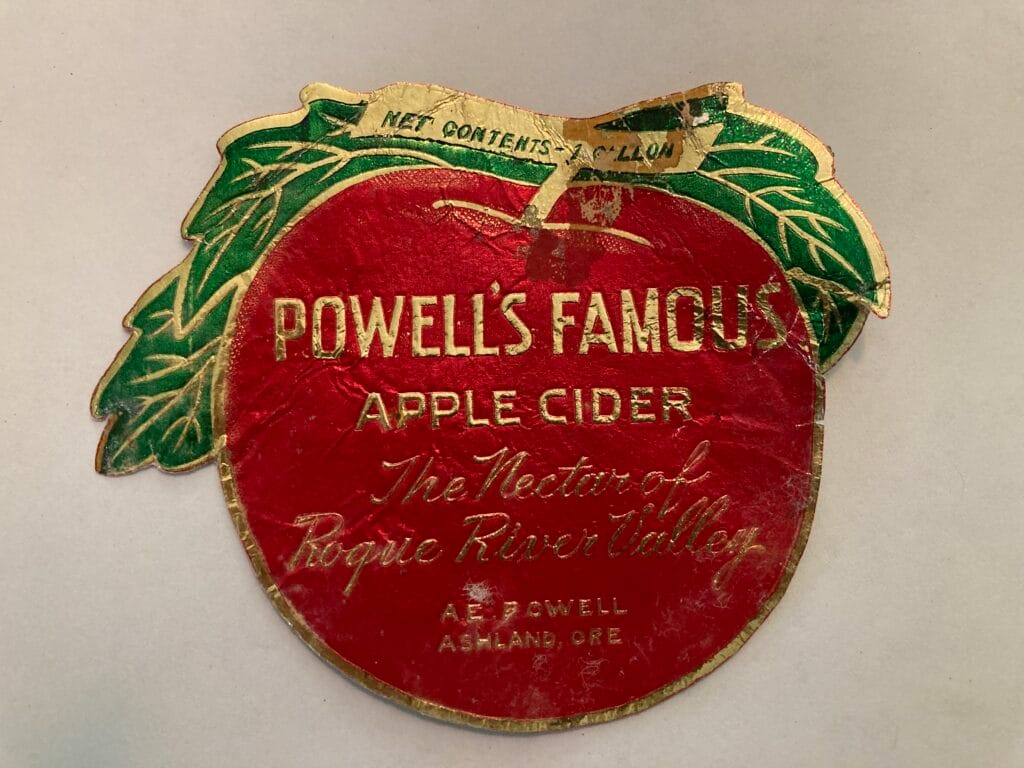
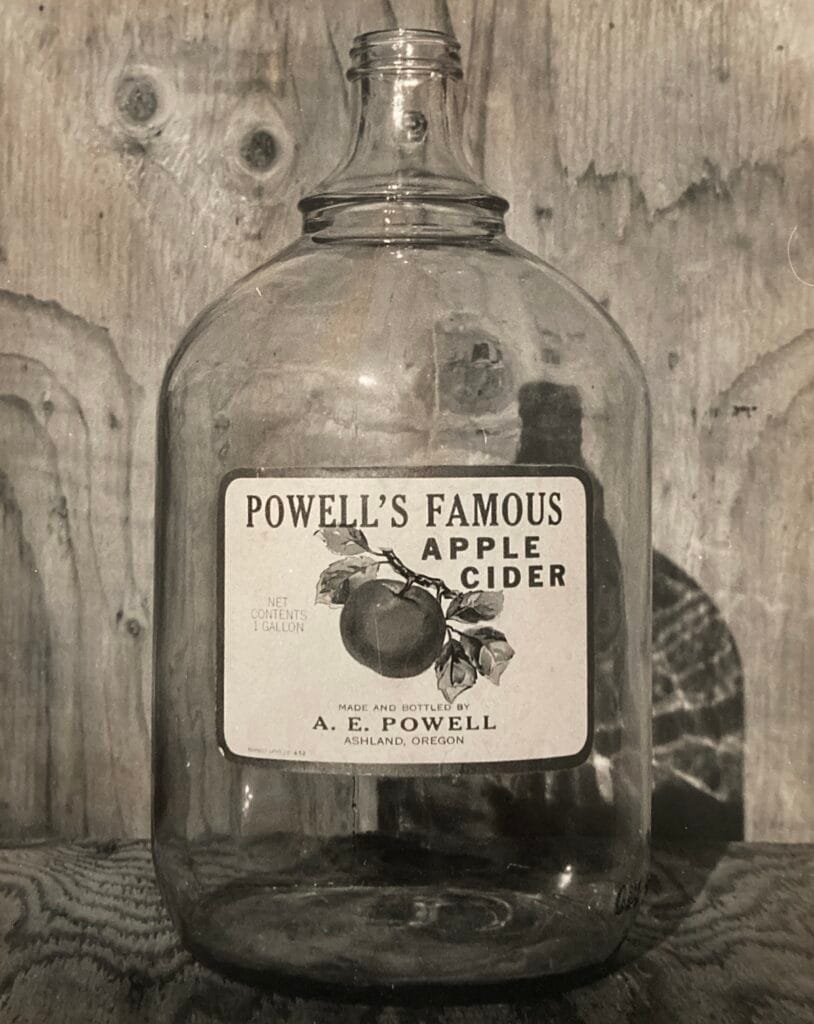
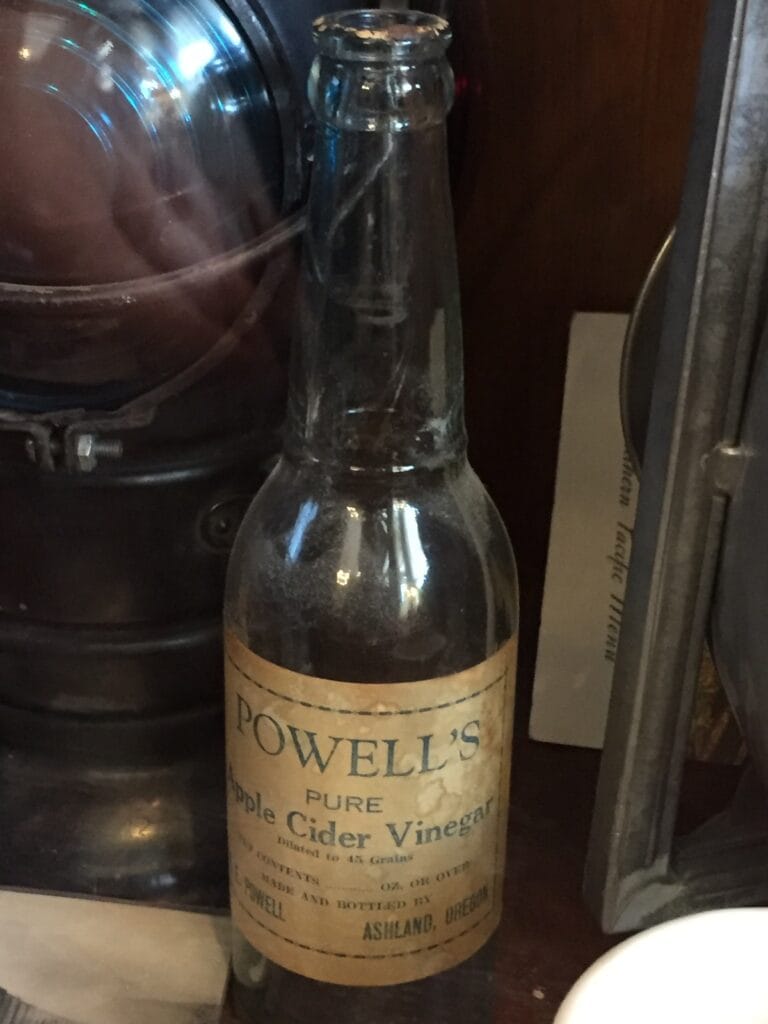
I have not yet learned how many total years “Powell’s Famous Apple Cider” and apple cider vinegar were sold in Ashland, but we do know that William Powell sold a lot of his Ashland-grown cider for more than 25 years.
Of the Ashland Powell family members, William and Rosanah (father and mother) are buried side by side at Ashland Cemetery on East Main Street. Five of their children are also buried in Ashland. David Sherman Powell was a carpenter who lived with his family on Oak Street. Cynthia Powell married William Flackus and their family lived on B Street. Edward Powell, who died at age 14, is buried at Ashland Cemetery. A.E. “Allie” Powell and his wife Rosa are both buried in Ashland, but not at the same cemetery. Finally, Thaddeus Powell and his wife Laura are buried together at Mountain View Cemetery.
The Powell family touched thousands of lives – locals and visitors – through their foods and businesses between the 1880s and the 1940s.
References:
William M. Powell (6/30/1837 – 8/30/1913)
Rosanah A. Burns Powell (4/3/1839 – 8/17/1917)
Anon. William Powell obituary, Ashland Tidings, September 1, 1913.
Ancestry.com. Numerous pages online.
Austin, Ed and Dill, Tom. The Southern Pacific in Oregon, Pacific Fast Mail, 1987.
Clary, Ethel Powell and Gunter, Hazel Powell, “Laura Powell’s Life.” (not published)
Findagrave.com. Numerous pages online.
Kramer, George. “Ashland Railroad Addition Historic District,” National Register of Historic Places, 1998.
Powell, Laura (Patton). “Diary,” mostly 1893 to 1895
Powell, Thaddeus Lincoln. “My Life.” (a brief memoir, not published)
Clary, Ethel Powell and Gunter, Hazel Powell, “Laura Powell’s Life.” (not published)
No Comments